
 Solar Inverter
 Hybrid Inverter
 Power Inverter
 Split Phase Inverter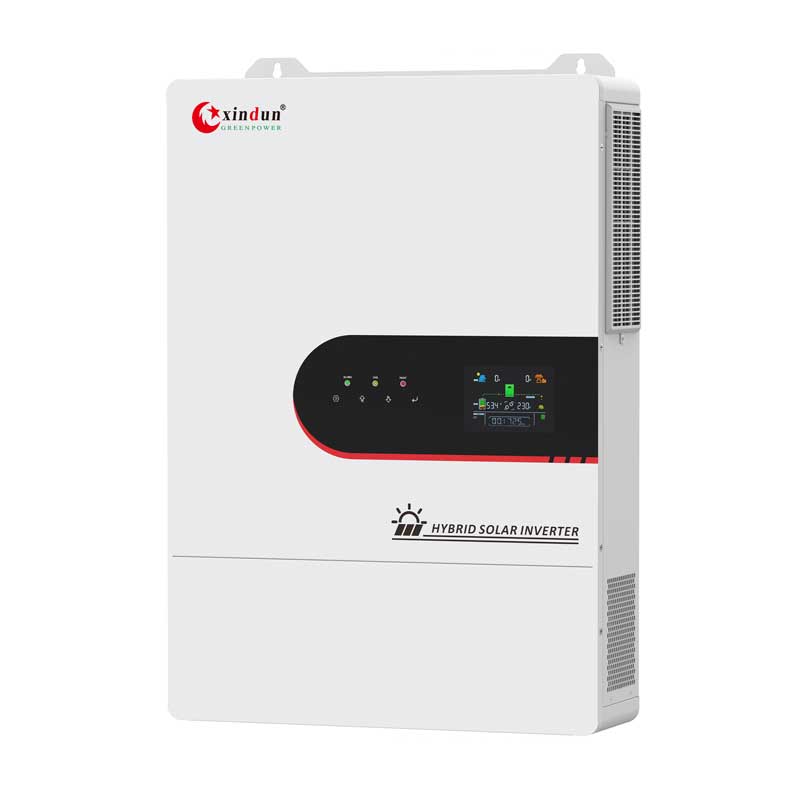
 Energy Storage Inverter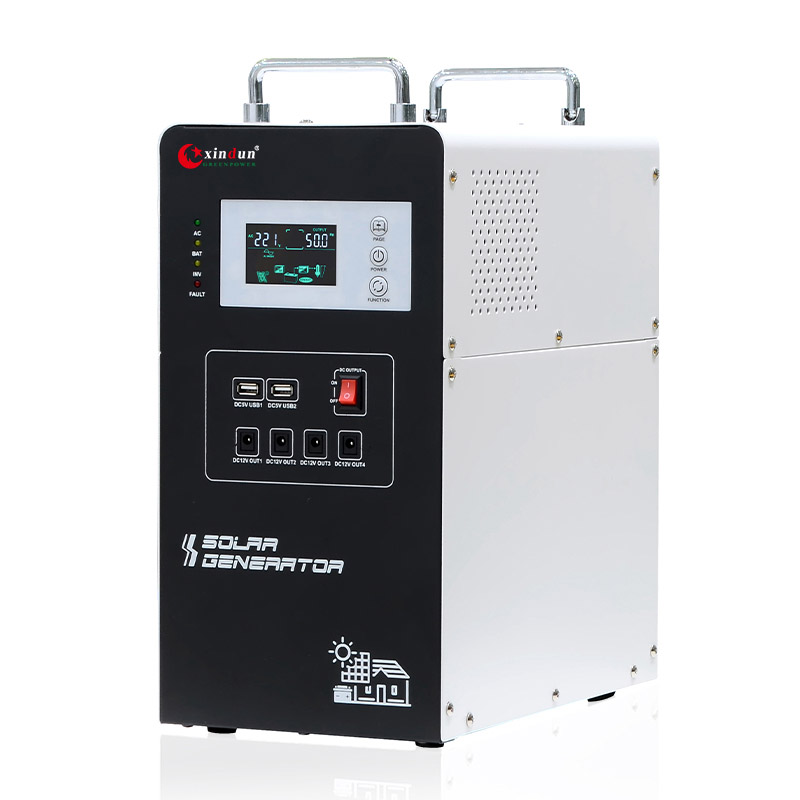

 3 Phase Inverter
 Solar System Kits
 Solar Charge Controller

 Solar Battery
 Asia
Asia
 Africa

 South America
 Europe
 North America
 Oceania & Antarctica


 Inquire

 Home
HomeWhy the Solar Power Inverter Is Key to Kazakhstan's Electricity Future?
 Aug 30,2025

 XINDUN
Kazakhstan, Central Asia's largest economy and a major energy producer, has long relied heavily on fossil fuels and coal for its electricity generation. This single, concentrated energy source not only poses severe environmental challenges and significant carbon emissions, but also makes the grid susceptible to voltage fluctuations and power outages during peak hours and in remote areas. With thermal power plants in northern Kazakhstan frequently undergoing maintenance due to aging equipment, and southern cities facing frequent power shortages during peak demand, how can this energy rich nation address the dilemma of "generating more electricity but not using it, and using more electricity but not enough"? With growing industrial and commercial electricity demand and national plans to increase the proportion of renewable energy, energy security and power supply stability have become paramount concerns for businesses and investors. Solar power generation is rapidly becoming a key component of Kazakhstan's energy transition. Solar power inverter, the heart of solar system, convert the direct current (DC) generated by solar panels into usable AC power, making them a crucial pillar of Kazakhstan's stable power supply. This article will delve into why solar inverters are key to solving Kazakhstan's power challenges and provide recommendations for solar power inverter in Kazakhstan.
Kazakhstan's Power Structure
According to the 2024 National Power Balance Report released by the Ministry of Energy and Natural Resources of Kazakhstan, Kazakhstan's current power structure shows a development trend of "traditional energy sources dominating, with renewable energy catching up."
Kazakhstan's power structure is still dominated by fossil fuels. Coal and natural gas fired power generation accounts for approximately 84%, with coal fired power generation accounting for over half, or approximately 56%, while natural gas provides approximately 28%. In contrast, low carbon power accounts for a smaller proportion of total power generation, approximately 15%, primarily comprising hydropower, wind power, and solar power. Hydropower is the primary source of low carbon energy, contributing nearly 10%, while wind power and solar power currently account for only approximately 4% and 2%, respectively. Furthermore, Kazakhstan partially offsets this power shortfall through net imports of approximately 1% of its electricity.
Although the current share of solar power generation is low, Kazakhstan plans to increase the share of renewable energy in its power mix to over 30% by 2035 in the long term to achieve energy diversification and sustainable development. By then, solar energy is expected to account for about 10 gigawatts of new installed capacity, covering a wide range of power generation projects such as large-scale power stations, distributed solar, and remote areas, thereby promoting the transformation of Kazakhstan's power structure towards a cleaner and more sustainable direction.
Is Kazakhstan's electricity supply stable?
Despite the continued growth of Kazakhstan's total installed capacity, electricity supply and demand remain under pressure. Particularly during peak winter demand and extreme weather conditions, some regions are prone to short term power shortages. According to 2024 statistics, Kazakhstan's winter peak electricity load could reach over 120% of the daily average load.
The power grid is aging. 65% of Kazakhstan's existing transmission lines and 70% of its substation and distribution infrastructure date back to the Soviet era and have been in operation for a long time. Over 80% of the equipment has exceeded its design lifespan, resulting in widespread problems such as aging equipment and outdated technology. This results in high transmission losses. The 110kV transmission line from north to south (1,200 kilometers) has a loss rate of 14%, wasting electricity equivalent to the annual consumption of 500,000 households. Grid failures are frequent, and are more likely to occur during extreme weather or load fluctuations. From January to June 2024, Kazakhstan experienced 47 nationwide power outages due to aging equipment, with an average restoration time of 6.5 hours per incident, far exceeding the international average of 3 hours. A severe snowstorm in January 2024 caused three substations to shut down, leaving 200,000 residents without power for over 72 hours. Furthermore, grid upgrades are progressing slowly. The Kazakh government planned to invest $8 billion in grid upgrades from 2023 to 2030, but due to fiscal pressures, only 35% of the planned investment was completed by 2024. The upgrade of key transmission lines in the south will take more than five years.
Regional power supply and demand are imbalanced. Kazakhstan faces a significant regional imbalance in electricity supply and demand, with the distribution of electricity resources showing a distinct "rich north, poor south" pattern. Northern Kazakhstan boasts abundant coal resources, providing sufficient electricity supply to meet local demand and enabling substantial export capacity. However, the economically developed southern region, home to 40% of the country's population and 35% of its GDP, faces a chronic power shortage. Demand reaches 8GW, while local installed capacity stands at only 5.2GW. This gap reaches as high as 2.8GW during peak winter demand, necessitating imports from the north or neighboring countries. This "north-south power transmission" pattern not only increases transmission losses in the power grid but also poses significant challenges to its operational stability and reliability. Against this backdrop, fully leveraging the abundant solar energy resources in the south and vigorously developing solar power generation will be an effective way to address the region's power supply and demand imbalance. Developing clean energy will not only gradually alleviate the tight power supply situation in the south but also optimize the national energy structure and reduce reliance on traditional fossil fuels.
The power structure is relatively monotonous, with an over reliance on coal and natural gas. This not only makes the country's power system vulnerable to price fluctuations in international energy markets and geopolitical risks, but also collides with Kazakhstan's international emissions reduction commitments, limiting its sustainable development potential. Developing solar energy is a key path to diversifying the power mix and enhancing national energy independence.
Load surge. Driven by economic growth, industrialization, and population growth, Kazakhstan's electricity demand continues to rise. In recent years, the influx of energy intensive industries such as cryptocurrency mining has led to the addition of 15 new cryptocurrency mining farms between 2023 and 2024, with a total power consumption of 1.2 GW (5% of Kazakhstan's total load). These mines are primarily concentrated in southern Kazakhstan, increasing summer peak load by an additional 10%, placing significant additional pressure on the already strained power system. This increased demand for electricity far outstrips the expansion of existing power generation capacity. Given the long construction cycles and slow commissioning of traditional power generation projects, solar power, with its relatively short construction cycle and rapid deployment potential, has become an effective means of rapidly meeting growing electricity demand and effectively alleviating the supply demand gap.
Electricity Prices in Kazakhstan
According to the 2024 electricity price statistics report released by the Ministry of Energy and Natural Resources of Kazakhstan, the current residential electricity price in the country is approximately $0.055/kWh, while the industrial and commercial electricity price range remains between $0.065 and $0.07/kWh. While this price level is still relatively low compared to developed European countries like Germany and France, it is worth noting that domestic electricity prices in Kazakhstan have shown a continuous upward trend over the past 24 months. In particular, between 2023 and 2024, the average increase in industrial and commercial electricity prices nationwide exceeded 20%. In some areas with limited energy supply, the annual increase in electricity prices even approached an astonishing 30%.
The main reasons for the continued rise in electricity prices can be summarized as follows: First, Kazakhstan's main coal fired power units have generally exceeded their design lifespans, resulting in a serious decline in power generation efficiency and increasing cost pressures on the power generation side. Second, Kazakhstan's energy structure is overly dependent on imported natural gas, and price fluctuations in the international energy market directly affect the domestic electricity price formation mechanism. Third, the government has invested heavily in power grid modernization and renewable energy integration projects, and the costs of these infrastructure upgrades are ultimately passed on to end user electricity prices. For example, for a typical medium sized manufacturing company with an annual electricity consumption of 5 million kWh, a 25% increase in electricity prices would see its annual electricity bill increase by approximately $80,000. In the current global trade environment, export oriented companies already face fierce market competition, and the sharp rise in energy costs is eroding their profit margins and market competitiveness.
It is worth noting that, against the backdrop of rising global traditional energy prices, solar power generation is showing tremendous development potential. Thanks to technological advancements and economies of scale within the global solar industry chain, the levelized cost of electricity (LCO) for solar power generation in Kazakhstan has significantly dropped to between $0.03 and $0.04 per kilowatt-hour (kWh), offering a price advantage of up to $0.04 per kilowatt-hour compared to traditional grid electricity prices. By investing in distributed solar power system, industrial and commercial enterprises can not only significantly reduce their dependence on the traditional grid but also achieve substantial electricity cost savings over the project's lifecycle, providing a practical solution to addressing energy price fluctuations.
Why does solar power generation have potential in Kazakhstan?
As the largest country in Central Asia, Kazakhstan is also the region's largest energy producer, boasting abundant solar resources. Kazakhstan enjoys abundant sunshine, with the southern region receiving an average of 2,800-3,000 hours of sunshine per year and 7-8 hours of effective sunshine per day, creating enormous solar energy potential. The southern and eastern regions, in particular, experience annual solar radiation levels of 1,500-1,700 kWh/m², creating excellent conditions for solar power generation and laying a solid foundation for the development of Kazakhstan's solar industry.
The country's vast land area also offers favorable conditions for the construction of large scale solar power plants. The sparsely populated steppes of the west and south not only easily accommodate the space requirements for large scale power plants, but also offer relatively low land acquisition costs, significantly reducing initial investment costs.
Kazakhstan attaches great importance to the solar power industry, viewing it as a key driver of its energy transition and implementing a series of policies to support it. The Renewable Energy Development Plan (2023-2024) aims to... The Kazakh National Energy Administration (NEA) aims to achieve a 30% share of renewable energy in the electricity mix by 2035, and a 50% share by 2050. Led by the Law on Supporting the Utilization of Renewable Energy, regular auctions for renewable energy projects have attracted significant domestic and international investment into the solar power sector. The auction mechanism clearly sets price caps and offers winning projects power purchase agreements (PPAs) of up to 10-20 years, ensuring stable and predictable returns for investors and effectively reducing investment risk.
In terms of policy, comprehensive tax incentives are provided for solar power projects, including full import tariff exemption for solar equipment, full corporate income tax exemption for the first five years and 50% reduction for the next five years, and land use tax exemptions, significantly reducing project construction and operating costs. The Kazakh government has also introduced a renewable energy quota system, mandating that power companies increase their renewable energy procurement ratio annually. This has created a stable sales channel for solar power products and boosted industry development from the demand side. The government provides an additional 15% subsidy for solar + energy storage projects. Subsidies are driving demand for energy storage inverters. Kazakhstan's abundant solar resources provide a natural guarantee for the efficient operation of solar system, making the "solar + energy storage" model a significant advantage in the energy structure transformation. This combination not only effectively alleviates power supply fluctuations but also provides more stable and sustainable energy solutions for remote areas, injecting new impetus into national energy security.
The Kazakhstan government is actively promoting cooperation with international organizations and governments in the field of new energy. Driven by the Belt and Road Initiative, Kazakhstan has established partnerships with new energy companies in China, the European Union, and Middle Eastern countries, introducing advanced solar module manufacturing technology and energy storage system solutions. Chinese companies, leveraging their expertise in solar With leading technologies and extensive experience in solar power equipment manufacturing, project construction, and operations management, Chinese companies are actively participating in Kazakhstan's solar projects. For example, China Energy Engineering Corporation (CEEC) is collaborating with Kazakhstan's Samruk Energy Company to jointly develop a 300MW solar project in Turkestan Oblast (supported by 90MW/360MWh energy storage, a corresponding substation, and power lines), and a 500MW wind power project in Karaganda Oblast (supported by 150MW/300MWh energy storage, a 220kV booster station, and power transmission lines). The participation of Chinese companies has not only brought ample capital and advanced technology to Kazakhstan, but has also cultivated a large number of local professionals, significantly promoting technological innovation and industrial development in Kazakhstan's solar power industry.
Suitable Inverter Types for Kazakhstan
Kazakhstan's electricity demand continues to grow, and more and more people are choosing to purchase solar power systems. A solar power inverter is the core of solar system, converting the DC power generated by solar panels into AC power to power household, commercial, and industrial loads. Different inverter types provide different power supply methods in different environments. Common inverter types include off grid inverter, on grid inverter, and hybrid inverter. Xindun specializes in off grid and hybrid inverter, providing a variety of solar solutions for Kazakhstan:
Off grid Inverter
Off grid system do not rely on the public power grid. During periods of abundant sunshine, solar panels collect energy and convert it into AC power through off grid inverter. This power is used to power household lighting, appliances like televisions and refrigerators, and any excess energy is stored in batteries for use at night or on cloudy days. These systems are suitable for remote areas where the power grid is unavailable or where the power supply is highly unreliable. Remote villages, towns, mining areas, and pastoral areas in Kazakhstan have limited power grid coverage. Off grid inverter can operate completely independently, addressing the urgent need for power in areas without electricity or with unstable power grids. When combined with energy storage batteries, it can also replace high cost diesel generators, achieving low carbon and economical power supply.
On grid inverter
On grid inverter convert solar DC power into AC power that meets grid standards and then injects it into the grid, enabling self use and the sale of excess power. When solar power is insufficient, grid outages can lead to power outages. These inverters are ideal for cities and industrial areas in Kazakhstan with well developed grid coverage and stable electricity demand. With the refinement of the "Law on Supporting the Utilization of Renewable Energy," the government has clarified grid connection priority and fixed power purchase mechanisms, making on grid solar power generation more attractive.
Hybrid inverter
Hybrid inverter perfectly combine the advantages of on grid and off grid inverter. They can be connected to the grid and equipped with battery energy storage. They manage solar power, the grid, and batteries, intelligently switching and optimizing power based on pre-set strategies, real time electricity prices, battery charge, and grid conditions. During the day, they prioritize solar power for loads, storing excess power in batteries or feeding it into the grid. At night or on cloudy days, the system automatically switches to battery power, but can also draw power from the grid when necessary, ensuring continuous power supply for loads. In cities with stable power grids, hybrid inverters can help businesses achieve self use of solar power and grid access for surplus electricity, reducing electricity costs. In areas with weak power grids or frequent blackouts, hybrid inverter can operate independently with batteries and solar system, ensuring uninterrupted power supply for critical loads. For gas stations, remote industrial facilities, and large agricultural areas, hybrid inverters can not only address power shortages but also alleviate the pressure of rising electricity prices.
Recommended Inverter Suitable for the Kazakhstan Market
Due to rising demand for inverter in the Kazakhstan market, quality, performance, and power are key considerations for customers. As a leading inverter manufacturer, Xindun provides high quality inverters tailored to Kazakhstan's power needs and environmental conditions. We recommend the following five popular solar power inverter suitable for Kazakhstan:
HFP-C Series Hybrid Solar Inverter
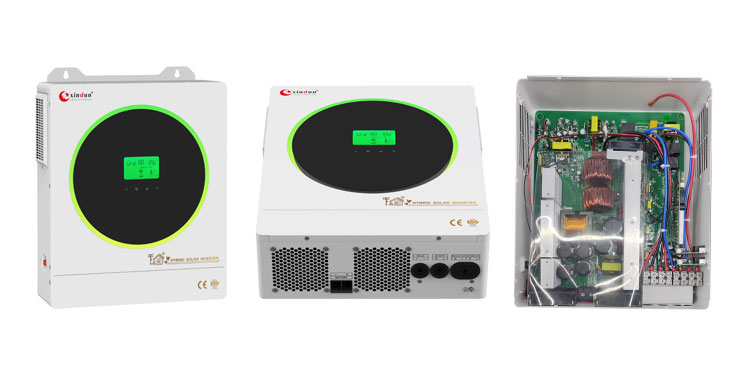
The Xindun HFP-C series hybrid inverter converts 24V/48V DC to 220V/230V/240V AC, with power options ranging from 4.3KW to 12.3KW.
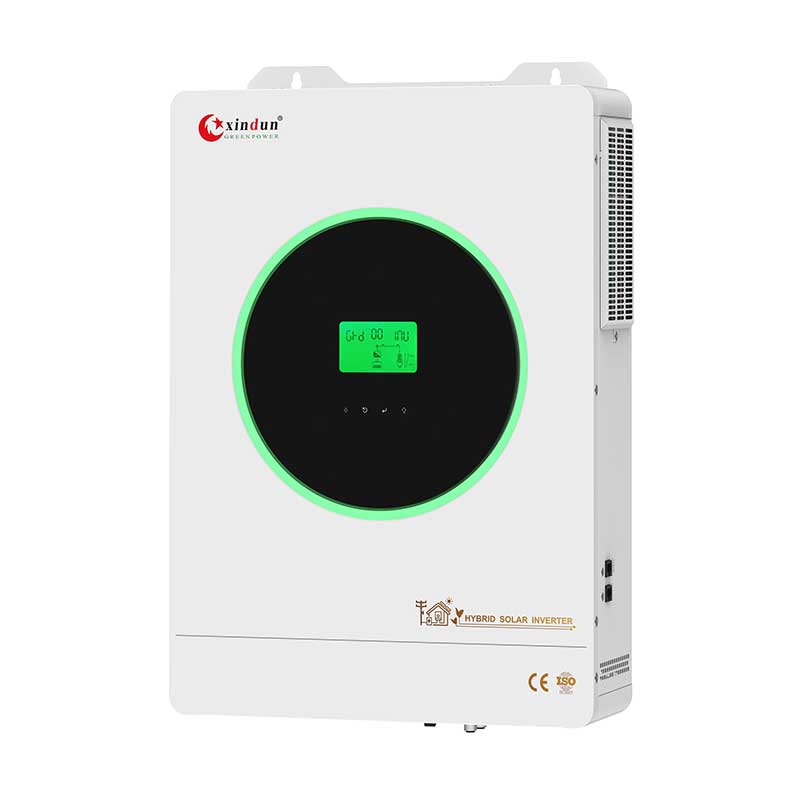
The Xindun HFP-C series inverter is a on grid and off grid hybrid solar inverter featuring a high-frequency design, pure sine wave output, dual AC outputs, and intelligent load management. It can simultaneously meet the demands of multiple loads, providing fast and seamless backup power, ensuring uninterrupted power supply to critical locations such as factories, data centers, and high-end residences in Kazakhstan, significantly improving power resilience. Bidirectional energy storage supports both solar and utility charging, ensuring system stability and reliability. The ultra-wide MPPT voltage range of 40V-500V allows for efficient power generation even in low winter sunlight or under unfavorable rooftop orientation, increasing overall profitability. The unique RGB ring LED design enhances the user experience. Output priority settings and lithium battery BMS compatibility further enhance safety and intelligent management. The HFP-C hybrid solar inverter also supports battery-free operation, reducing initial system investment costs.
HP PLUS+ Series Parallel Hybrid Solar Inverter
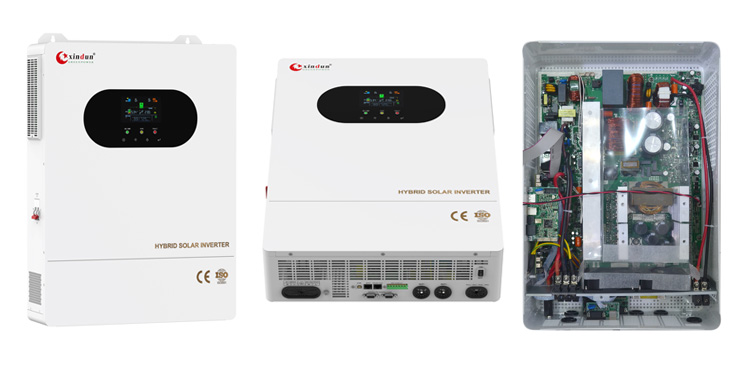
The Xindun HP PLUS+ series hybrid inverter converts 48V DC to 208V/220V/230V/240V AC, with power options of 5KW/10KW/12KW.
The Xindun HP PLUS+ series inverter is well suited for Kazakhstan's complex power system. It supports parallel operation, with up to nine units in the 5KW model and up to six units in the 10KW and 12KW models. Whether for small homes or large commercial and industrial sites, this hybrid inverter offers flexible scalability, easily meeting diverse load demands and avoiding the "one unit limited" issue. For businesses, this means they can gradually expand capacity as their business grows without a large upfront investment. Furthermore, the time of use charging and discharging function helps customers reduce electricity costs by taking advantage of peak and off-peak prices. The high frequency design and pure sine wave output ensure high system efficiency and low no load losses, reducing long term operating costs. With a built in MPPT controller and a solar voltage input of up to 500V, this inverter maintains high power generation efficiency even in low sunlight or challenging installation conditions during Kazakh winters. Combined with intelligent parameter settings, multiple safety features, and excellent compatibility with lithium batteries, this hybrid inverter offers flexible scalability, cost effectiveness, and long term reliability.
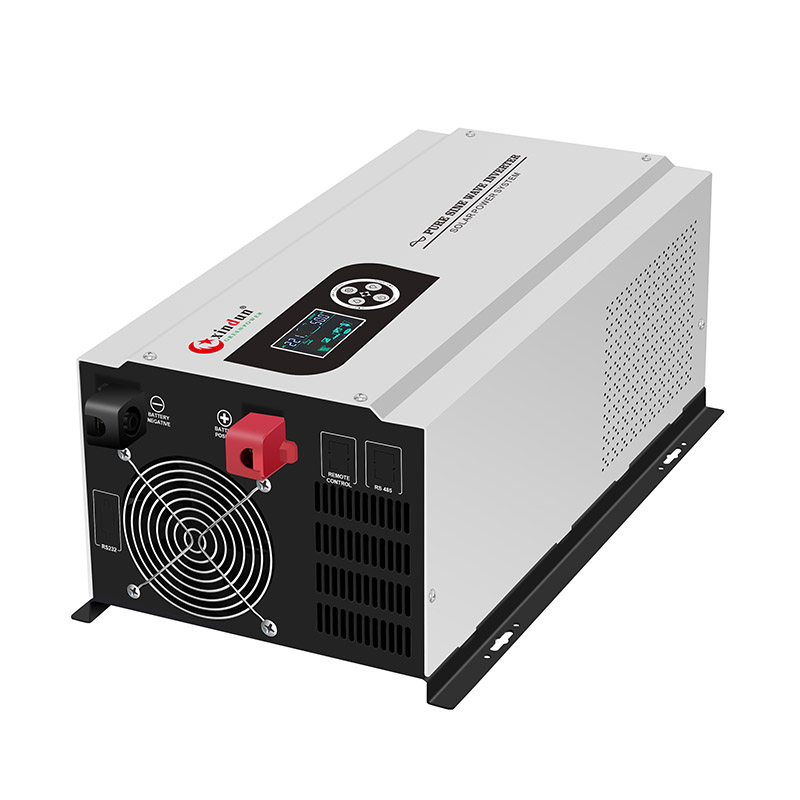
WF Series Solar Power Inverter
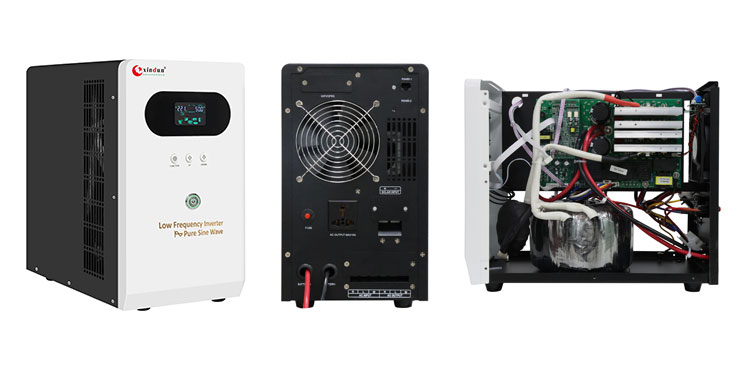
Xindun's WF series solar power inverter convert DC 12V/24V/48V/96V/192V/240V/384V to AC 110/120/220/230/240V, with power options ranging from 700W to 40kW.
The WF series solar power inverter utilize a power frequency design, ensuring stable operation even under complex grid conditions or large load fluctuations. They provide efficient inverter conversion and pure sine wave output, ensuring safe operation for sensitive loads such as factory equipment, home appliances, and communications equipment. Their flexible mains charging current adjustment range (0-20A) allows users to configure their system based on their actual battery capacity, avoiding overinvestment and shortened battery life. With multiple operating modes, including mains priority and inverter priority, users can customize the operating mode based on their actual power usage. The optional built in MPPT solar controller not only improves charging efficiency but also enables customers in solar rich southern and western regions to achieve higher clean electricity returns. A newly added fault code query function helps users quickly locate problems, shorten maintenance time, and minimize economic losses caused by downtime. The WF series is compatible with both diesel and gasoline generators, ensuring reliable off grid power supply in areas beyond the grid, such as mining and pastoral areas in Kazakhstan, and in the oil and gas industry. Equipped with RS485 communication and mobile app remote monitoring capabilities, businesses and families can monitor equipment operation at any time, enabling more intelligent energy management.
LF Series Solar Power Inverter
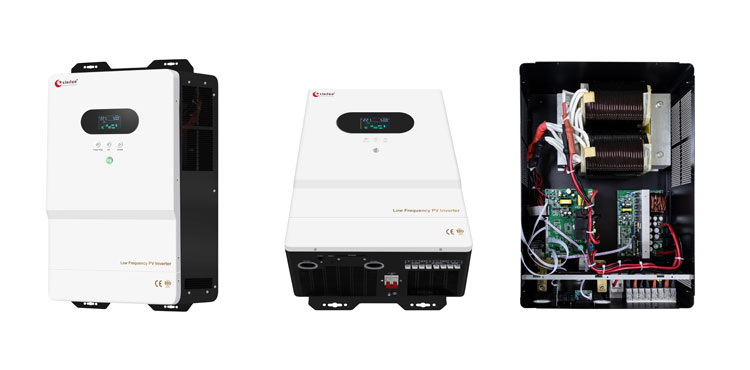
Xindun's LF series solar power inverter convert DC 12V/24V/48V to AC 110/120/220/230/240V, with power options ranging from 1KW to 12KW.
The LF series solar power inverter is a mains frequency inverter designed to maintain stable operation in complex power environments and high load surges, outputting pure sine wave current to ensure the safe use of industrial equipment and household appliances. It supports flexible charging current adjustment (0-30A), allowing users to flexibly configure their system based on battery capacity, avoiding excessive costs and extending battery life. Its exceptional load capacity and triple starting peak power make it suitable for high starting current equipment commonly found in Kazakhstan, such as pumps and compressors, ensuring no power outages during high-load startups. At the same time, the newly added fault code query function allows users to grasp the equipment operation status in real time without professional skills, quickly troubleshoot faults, and reduce the impact of power outages caused by equipment downtime; it supports diesel (gasoline) generator power generation, and can ensure uninterrupted power supply even in remote areas or in harsh power environments where extreme weather causes power grid paralysis, ensuring the normal operation of life and production; it also takes into account the dual needs of industry and civil use, and with a wall mounted design, it can be easily installed in factory workshops, shops or homes, saving space while reducing installation difficulty.
ESS-Li Series All In One Solar Power Generator
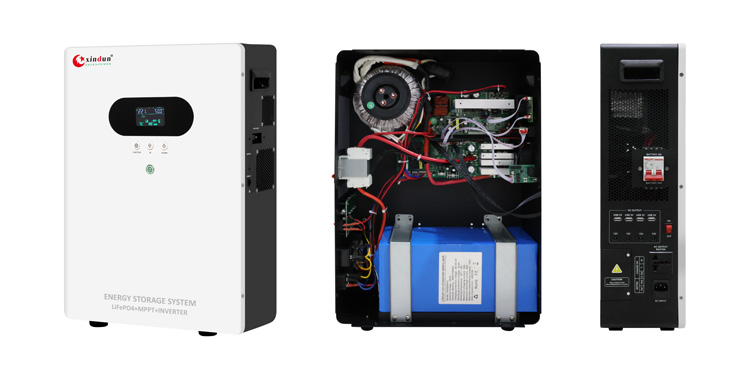
The Xindun ESS-Li series all in one solar power generator, DC 12.8V/25.6V/51.2V to AC 110/120/220/230/240V, with power options ranging from 300W to 10KW.
The ESS-Li series all in one solar power generator utilizes an integrated MPPT solar controller + inverter + lithium battery design. It requires no complex assembly or commissioning, making installation quick and easy. Even in remote areas of Kazakhstan, where professional electricians are scarce, users can quickly establish an independent power supply system, eliminating reliance on an unstable power grid. Equipped with multiple plug and play output interfaces, including USB, DC, and AC outlets, it meets diverse power needs, from powering mobile phones and laptops at home to driving lights and power tools in small workshops. The ESS-Li energy storage system can be charged not only by solar energy but also by diesel and gasoline generators and the grid. This provides a flexible and reliable energy source for Kazakhstan, which is plagued by rising electricity prices, aging coal fired generators, and fluctuating power grids. Users can also monitor system operation in real time via WiFi or the app, keeping tabs on battery status and load conditions, and avoiding unexpected power outages that could cause losses to production or livelihoods. Equipped with overvoltage, overtemperature, and overload protection, as well as battery BMS reporting, the system monitors battery health in real time and automatically mitigates risks such as voltage surges, overheating, and excessive loads. This not only ensures long term stable operation but also prevents safety incidents caused by power failures, making it a perfect fit for Kazakhstan's complex and volatile power environment.
Why choose Xindun as your solar power inverter supplier in Kazakhstan?
Currently, the competitive landscape in Kazakhstan's solar market is dominated by international brands, with solar and energy storage companies from China, Europe, and the Middle East holding a significant share. Chinese brands such as Xindun Power, Trina Solar, and Jinko Solar have established a strong presence in the local market thanks to their cost effectiveness and proven technical solutions. So why is Xindun a worthy long term partner?
Founded in 2006 and headquartered in Foshan, China, Xindun boasts nearly 20 years of industry experience. We specialize in solar power inverter, solar controller, battery, and complete solar system solutions. Our products are exported to over 100 countries and regions across Asia, Africa, and Latin America, accumulating extensive international project experience. Our modern factory, covering over 10,000 square meters and equipped with 12 automated production lines, adheres to strict standardized processes from R&D to production and shipment, ensuring that every product undergoes four rigorous inspections to minimize errors and provide customers with a truly reliable quality assurance.
Xindun boasts a professional team of over 30 experienced engineers, and each product is designed based on global market research and technological innovation. To address Kazakhstan's unique power environment, we have established a local team to deeply understand issues such as power shortages, voltage instability, and insufficient grid coverage. These issues are then fed back to headquarters for product innovation and upgrades. We are able to provide local customers with inverter products that are more tailored to their specific needs, and we can quickly respond locally, offering timely and professional technical and service support to help them successfully conduct their local business.
All Xindun products are certified by international standards, including CE, IEC, TUV, and RoHS, fully complying with Kazakhstan's power safety and usage standards. We offer a diverse range of products, including efficient and stable solar products. We also support OEM/ODM customization to meet customers' individual needs in terms of design, technical specifications, and color options. We also offer customized solutions for complex and harsh power environments.
As a source manufacturer, Xindun can offer partners more competitive pricing, helping them increase their profit margins in the market. At the same time, choosing our solar system solutions can significantly reduce grid reliance, lower energy costs, and deliver long term economic benefits for businesses and households.
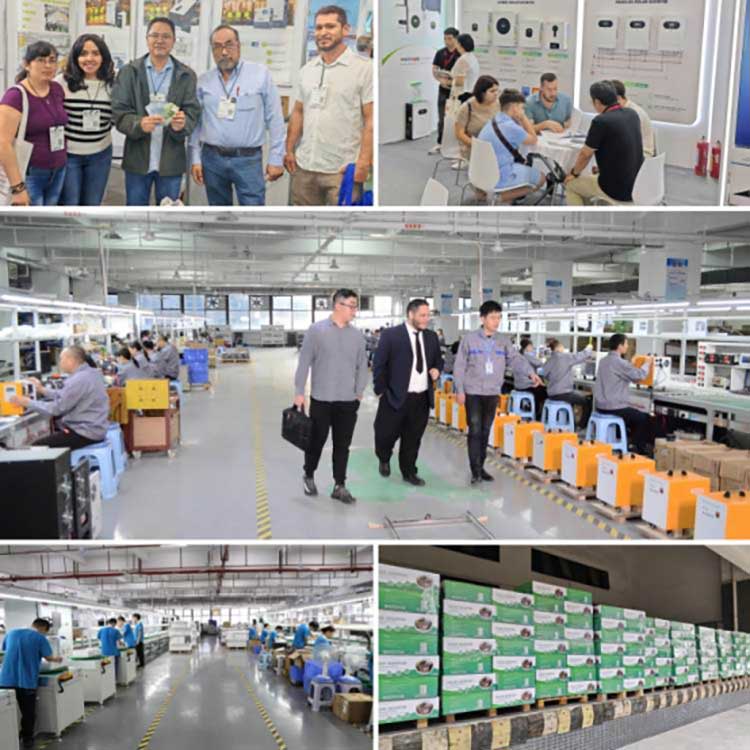
Xindu actively participates in major solar and energy storage exhibitions around the world annually. This not only provides an opportunity to showcase our latest technologies and products, but also a platform for in depth communication with industry experts, distributors, and wholesalers. Each exhibition attracts a large number of clients seeking cooperation. Through professional communication, we have established deep trust and a desire for long term cooperation with our global partners.
If you are interested in our inverter products or solar solutions, or would like to explore cooperation opportunities in Kazakhstan, please feel free to visit our official website and leave your contact information and specific requirements in the form below (https://www.xinduninverter.com/). Our professional sales team will contact you promptly during business hours to provide professional one on one service and detailed solutions.
 Chile’s Solar Power Inverter Market Trends and Potential
 Top Selling Products













 WeChat
 Email
Email WhatsApp