
 Solar Inverter
 Hybrid Inverter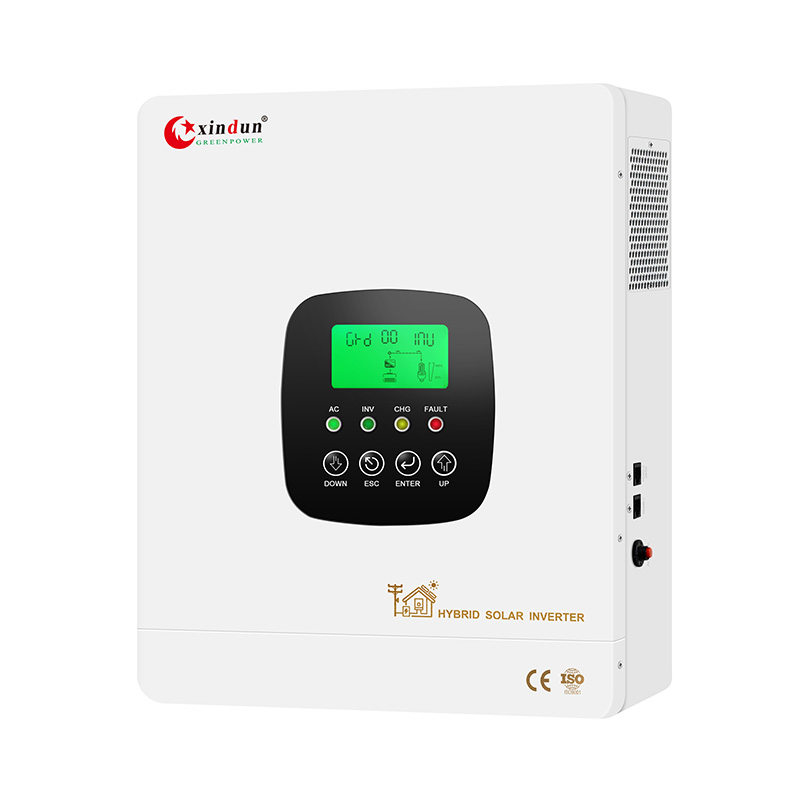
 Power Inverter
 Split Phase Inverter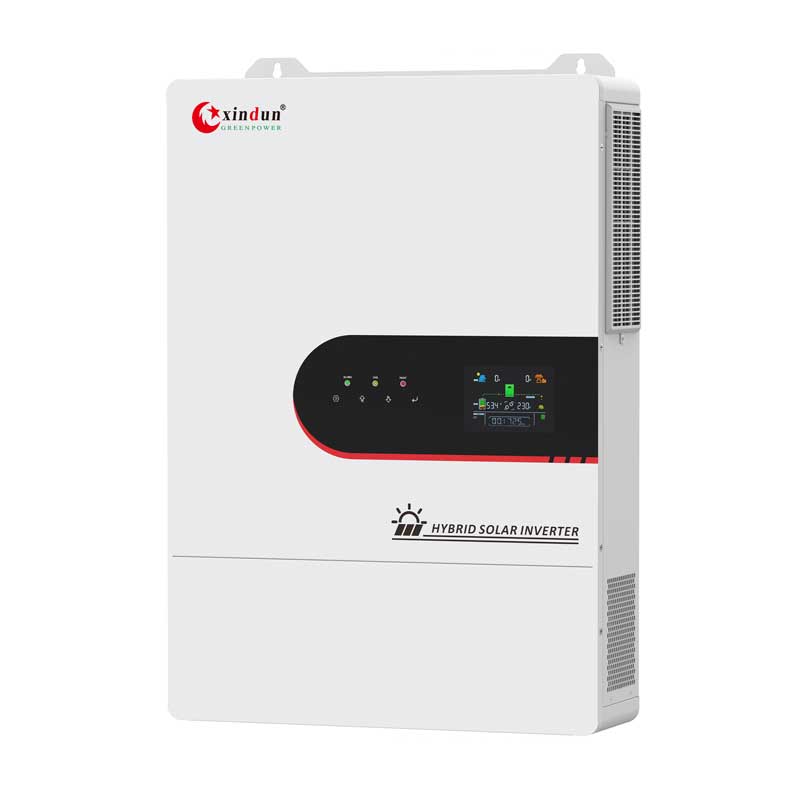
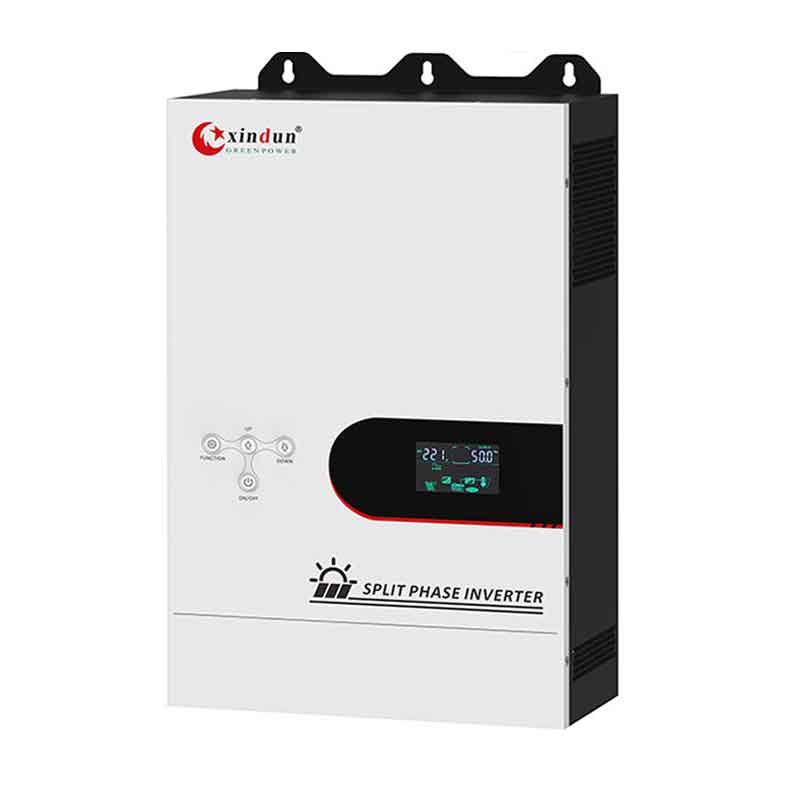
 Energy Storage Inverter

 3 Phase Inverter
 Solar System Kits
 Solar Charge Controller

 Solar Battery
 Asia
Asia
 Africa
 South America
 Europe
 North America
 Oceania & Antarctica


 Inquire
 Home
HomeDoes a home hybrid inverter Need to Be Connected to the Grid?
 Jun 13,2026

 XINDUN
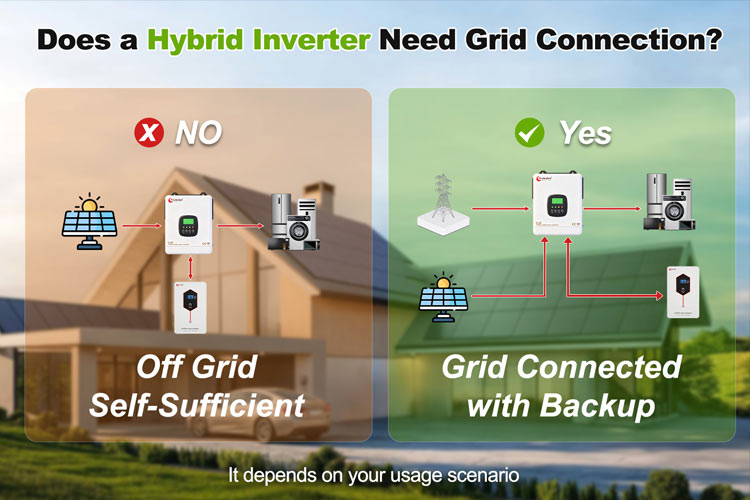
Hybrid inverters, with their ability to coordinate solar, grid, and battery power, have become the preferred choice for home solar systems. They efficiently utilize solar energy while flexibly adapting to household electricity needs. But does a hybrid inverter for home use need to be connected to the grid? The answer depends on your actual home electricity usage scenario, system configuration, and power reliability requirements.
The biggest advantage of a hybrid inverter is its ability to enable bidirectional energy flow with multiple configurable modes. It adjusts the power supply based on solar generation, battery storage level, and grid conditions — balancing energy independence with power security. This is what sets it apart from pure grid-tied and pure off grid inverters. It also adapts to various home scenarios. Below, Xindun analyzes which scenarios require grid connection for home hybrid inverters.
Scenario 1: Off Grid Self-Sufficiency
If you live in remote rural areas, mountainous regions, or islands where the grid is not available, this is an off grid self-sufficiency scenario. In this case,grid connection is not required, provided your solar system is properly configured to meet daily electricity needs with sufficient battery storage. The hybrid inverter can achieve complete self-sufficiency.
In this scenario:
- DC power generated by solar panels is converted to AC by the hybrid inverter to power household loads (lights, appliances, etc.).
- When solar generation exceeds immediate demand, the excess power is stored in the battery, avoiding waste.
- Even during cloudy days or at night when solar is not generating, the stored battery power continues to supply the home — completely independent of the grid. True energy autonomy. Generate your own power, use your own power.
Scenario 2: Low Solar Generation on Cloudy Days
Homeowners with hybrid solar systems often worry about cloudy, overcast, or low-light conditions when solar generation drops significantly — sometimes not even meeting basic home electricity needs. This is where the grid backup function of hybrid inverters (such as the Xindun HFP hybrid inverter) perfectly solves the problem. Grid connection is required in this scenario.
The hybrid inverter automatically detects solar power, voltage, and current. When solar is insufficient, the grid supplements the shortfall. Solar and grid supply power together, ensuring household loads operate normally without sudden power outages.
With grid backup enabled, as long as there is some solar generation, the hybrid inverter prioritizes using solar power. The shortfall is supplemented by the grid. This avoids wasting solar energy while ensuring stable power supply. Even during consecutive cloudy days, the grid ensures continuous stable power — balancing environmental benefits with convenience.
Therefore, hybrid inverters are very suitable for users who have already installed home solar systems, whose photovoltaic modules have relatively small power output, who are worried about insufficient photovoltaic power generation on cloudy days, and who want to ensure uninterrupted daily power supply.
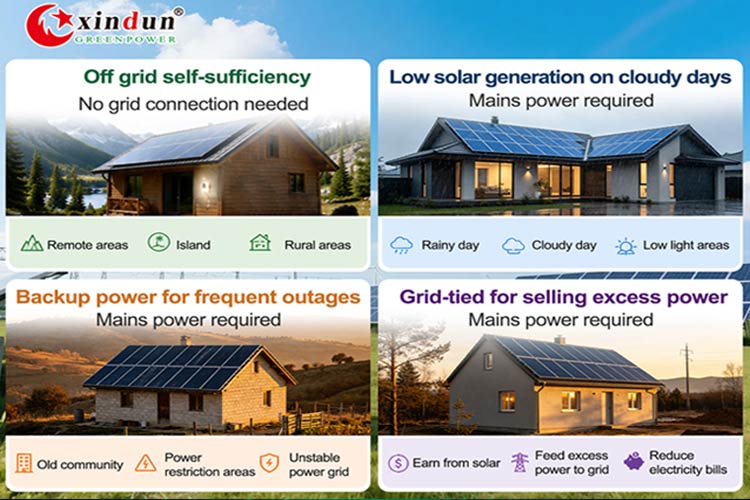
Scenario 3: Backup Power
For families in areas with frequent power outages (such as old residential areas, summer peak load shedding, or unstable grid in remote regions) — but who do not want to be completely disconnected from the grid — this hybrid inverter is also suitable. Grid connection is required.
It also needs to be connected to the mains power grid, and can be connected to three energy sources at the same time: photovoltaic, mains power, and battery as backup power. When the mains power is unavailable, photovoltaic solar power can be used to supply power during the day, and battery power can be used at night to ensure a stable power supply for the household.
This ensures stable household power supply.
Scenario 4: Grid-Tied for Selling Excess Power
When using grid-tied mode, the hybrid inverter must be connected to the grid. In this mode:
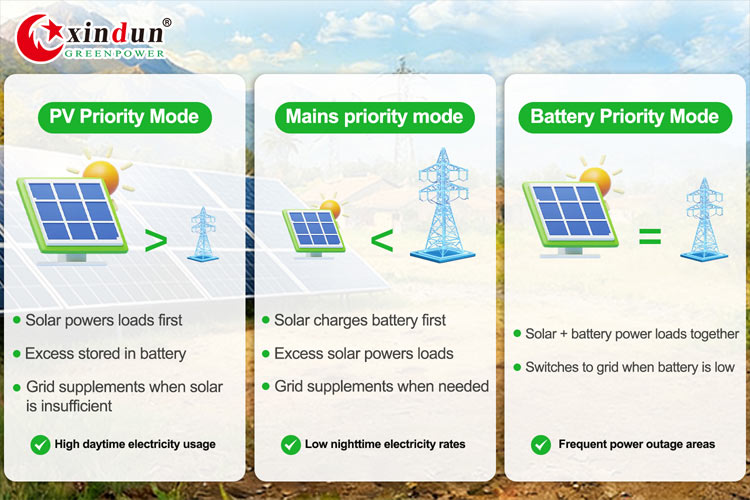
- Solar power is first used to supply household loads.
- Excess generation is fed directly into the grid and sold to the utility company for revenue.
- If solar generation cannot cover household demand, the shortfall is supplemented by the grid.
This maximizes the utilization of solar energy while generating additional income from selling excess power, reducing overall household electricity costs.
Conclusion
Whether a home hybrid inverter needs grid connection depends on your usage scenario:
- No grid connection needed — if you have sufficient solar and battery storage and want complete off grid independence.
- Grid connection needed — if you have unstable power supply, want reliable backup, need emergency power, want to sell excess power for revenue, or aim to save energy and reduce costs.
Hybrid inverters meet diverse electricity needs across different scenarios — whether off grid self-sufficiency or hybrid complementary operation — maximizing solar energy utilization and providing more efficient and stable power solutions for your home.
Xindun Hybrid Inverter Recommendations
Xindun HFP Hybrid Inverter
The Xindun HFP hybrid inverter is a high-frequency on-off-grid hybrid solar inverter. It supports flexible switching among Hybrid, Off Grid, and On Grid modes, and can operate without batteries. It provides high-frequency pure sine wave output and realizes coordinated energy complementation among PV, grid, and batteries — triple-layer energy security:
- When sunlight is sufficient, solar powers loads and charges batteries.
- When sunlight is poor, solar and battery supply power together.
- When both solar and battery are depleted, grid power takes over seamlessly, ensuring stable, uninterrupted 24/7 power for your loads.
Other Hybrid Inverter Series
In addition to the HFP, Xindun also offers HFP-C, HFP-S, HFP-E, and HP PLUS+ hybrid inverter series.
The HFP-C, HFP-S, and HFP-E models retain all HFP functions and add dual AC output capability. The main and auxiliary AC outputs can drive loads independently or simultaneously, with balanced intelligent power distribution — powering different devices at the same time and achieving more rational power allocation.
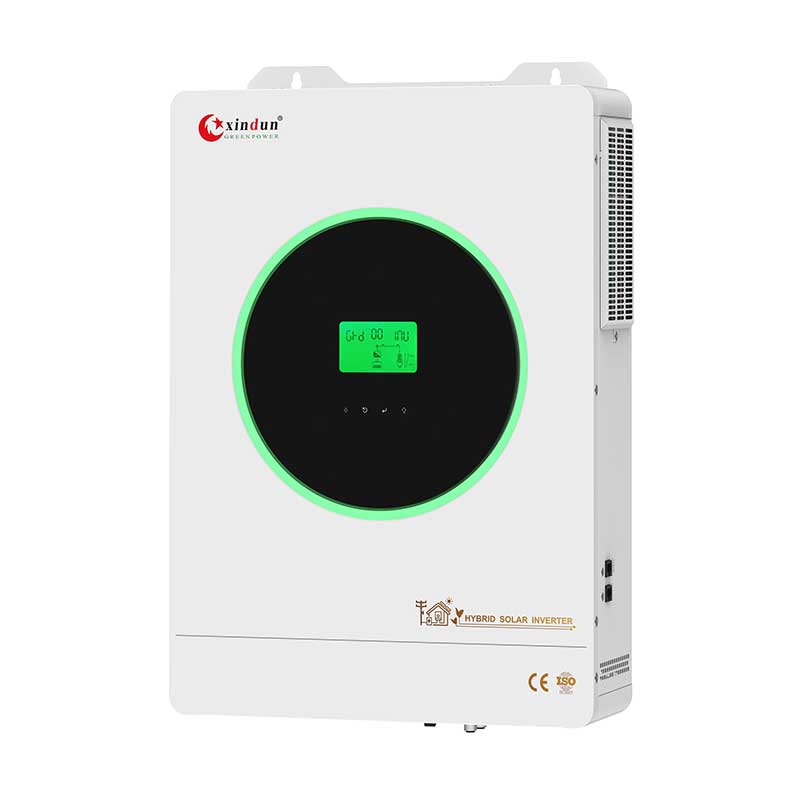
- HFP-C features an annular RGB LED light strip design — 8 customizable colors with intelligent color indication.
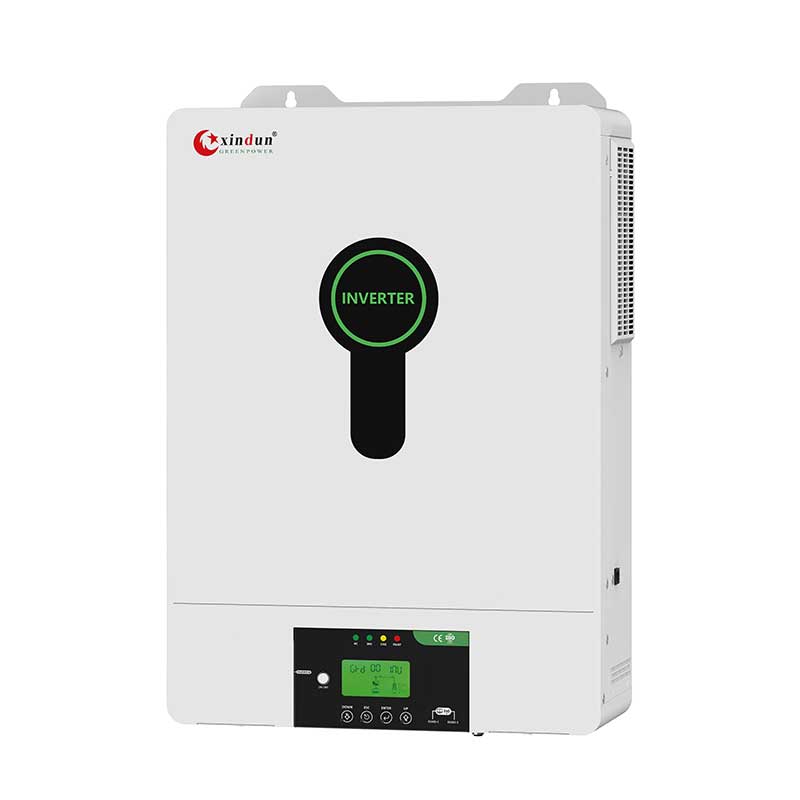
- HFP-E features a detachable display screen — the screen module can be externally mounted, allowing flexible installation at convenient locations for observation, operation, and monitoring.
HP PLUS+ hybrid inverter (10kW / 12kW)
Supports parallel connection — up to 6 inverters for single-phase or three-phase output, delivering maximum total output of 60kW / 72kW. Offers excellent flexibility and scalability, especially for systems that need phased expansion. This series also supports time-of-use charge/discharge settings with three customizable time periods, helping users take full advantage of peak-valley electricity price differences to effectively reduce power costs.
US Standard Models
All Xindun HFP, HFP-C, HFP-S, HFP-E, and HP PLUS+ hybrid inverters feature AC output voltage of 220/230/240V. However, many countries and regions use US standard voltage (110V or 120V AC). For these markets:
- Xindun HFU US Standard Single-Phase Hybrid Inverter (1.8kW / 3.3kW / 6.3kW) — specially designed for US standard voltage regions, outputs 120V AC, identical functions to the HFP series.
Split-Phase Model
- Xindun HU US Standard Split-Phase Hybrid Inverter (10kW / 12kW) — supports both split-phase and single-phase modes, delivers dual-voltage output of 120V and 240V, plus time-of-use charge/discharge settings. Up to 6 units can be paralleled for capacity expansion (60kW / 72kW). Supports single-phase, two-phase split-phase, split-phase, and three-phase parallel connections — providing reliable power for both residential and commercial-industrial applications.
For more information about Xindun hybrid inverters, please leave your details in the customer service window at the bottom of our website. Xindun will contact you as soon as possible during working hours.
 Inverter Troubleshooting & Fault Code Guide | HDSX Three-Phase Off-Grid Inverter
 Top Selling Products













 WeChat
 Email
Email WhatsApp