
 Solar Inverter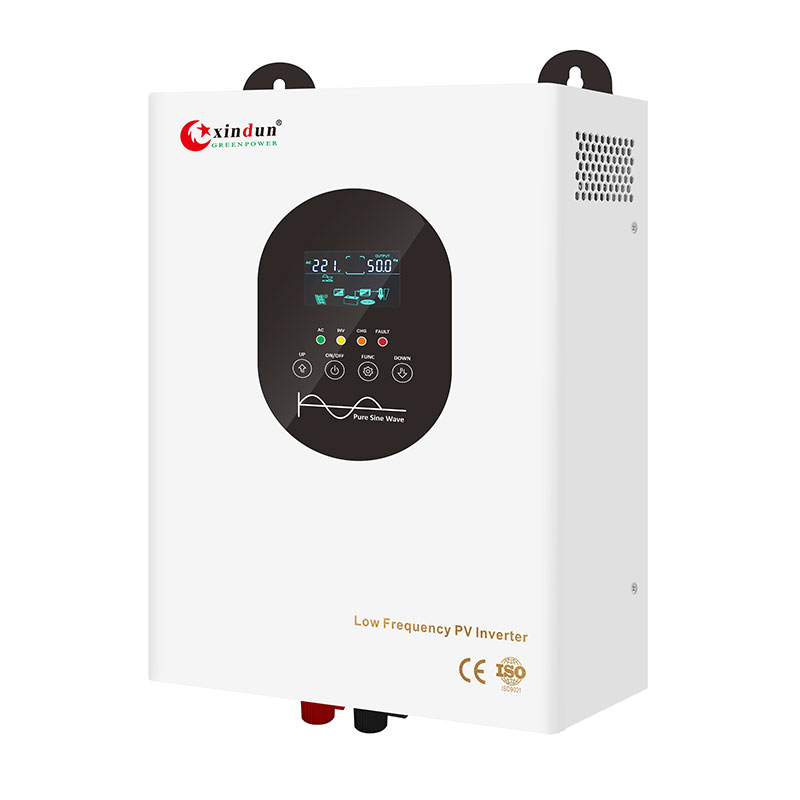
 Hybrid Inverter
 Power Inverter
 Split Phase Inverter
 Energy Storage Inverter

 3 Phase Inverter
 Solar System Kits
 Solar Charge Controller

 Solar Battery
 Asia
Asia
 Africa

 South America
 Europe
 North America
 Oceania & Antarctica


 Inquire

 Home
HomeWhich Chinese manufacturers produce WiFi inverters with remote monitoring?
 Jul 17,2026

 XINDUN
If you've been keeping an eye on the Solar energy storage market lately, you've probably noticed a significant change—more and more people are specifically asking for hybrid inverters with WiFi monitoring. This feature used to be a nice-to-have add-on, but now it's quickly becoming a must-have requirement on many purchase orders.
The reason is simple. Solar storage systems are popping up everywhere—rooftops, factories, farms, islands, remote mountain villages. You can't station a technician at every site, and end users usually don't have the technical know-how to troubleshoot issues themselves. A small glitch means a phone call, and every phone call means a service trip. The costs in time and labor add up fast.
What buyers really need is the ability to manage systems remotely. That's where a WiFi monitoring feature comes in—it lets you check system status, adjust parameters, and receive alerts without ever stepping foot on site.
So, which Chinese inverter manufacturers make good WiFi inverters with this feature? Let's get straight to the list.
Which manufacturers are worth your attention?
Several domestic manufacturers offer hybrid inverters with WiFi monitoring. Here's a quick comparison of some representative players:
| factory | Establishment time | Scale Overview | Features |
| Huawei Digital Power | 2000 | Number one in global inverter shipments for many consecutive years | With a strong foundation in digital technology, it boasts a leading monitoring platform and system ecosystem. |
| Sungrow Power | 1997 | Second largest in global shipments | With a solid foundation in power electronics technology, our product line covers everything from residential to power station applications. |
| Guangzhou Sanjing Electric (SAJ) | 2004 | With approximately 1,300 employees, it is a specialized and innovative "little giant" enterprise. | Exporting to Europe, Australia, and North America, with extensive experience in the residential solar and energy storage sector. |
| Guangzhou Philis Solar Energy | 2007 | With over 300 employees, the company generates an annual output value of approximately 400 million yuan. | Products cover more than 40 countries and regions |
| Guangdong Xindun Power Technology | 2006 | The factory has over 160 employees, covers approximately 15,000 square meters, and has 10 production lines. | Exported to over 80 countries, supports OEM/ODM customization. |
All the manufacturers listed above offer WiFi inverter product lines with remote monitoring capabilities. If you need strong brand backing and a mature platform ecosystem, the larger players are safe bets. If you value flexible customization, OEM support, and direct communication, mid-sized specialized manufacturers are often a better fit. The right choice really depends on your project requirements and business model.
But before you make a decision, two questions are worth answering: What exactly can WiFi monitoring do for you? And besides WiFi, what else should you look for in a quality inverter? Getting clear on these points will help you choose with confidence.
What can WiFi monitoring actually do for you?
Many people think WiFi monitoring is just about checking power output on a phone. But a well-designed monitoring system offers much more.
Real-time data viewing is the most basic and commonly used function. Solar input, battery charge level, load consumption, grid connection status — all updated every few seconds on your phone. It's not just convenient; it gives you full visibility into every site you manage.
Remote parameter adjustment takes it a step further. Say a customer reports the battery drains too deeply overnight. Instead of dispatching a technician, you can simply adjust the discharge cut-off voltage from your phone. In winter, when sunlight is limited, you can remotely fine-tune the charge/discharge strategy to optimize performance. Mode switching, voltage adjustments, current limits — all done remotely.
Instant fault alerts are another major cost-saver. If something goes wrong, your phone receives a push notification with a fault code and initial diagnostic info. Many times, you'll know about an issue before the customer even notices. You can assess whether remote resolution is possible or schedule a service visit with the right tools and parts ready — fixing it in one trip.
Data logging is often overlooked but incredibly useful. All operational data — daily generation, consumption, battery cycles — is stored and exportable by day, month, or year. It's valuable for system optimization, post-sales troubleshooting, and even generating performance reports for customers as a value-added service.
Multi-device management becomes essential if you handle multiple installations. One app account can link to all your devices, showing the status of every site on a single screen — which units are running fine and which need attention.
Put it all together, and the bottom line is clear: WiFi monitoring saves travel costs, labor hours, and customer trust. Fewer site visits, faster issue resolution, and happier customers.
Beyond WiFi: what else should you look for?
A great monitoring system is only as good as the inverter it's attached to. Fancy app features mean nothing if the hardware can't deliver reliable performance. Here's what else to check before you commit.
·Conversion efficiency comes first. Peak efficiency should exceed 98%, with MPPT efficiency above 99%. A two-percentage-point difference doesn't sound like much, but over a year, a 98%-efficient machine generates nearly 2,000 kWh more than a 96% unit on a 10kW system. That's real revenue for your customers.
·MPPT voltage range is another critical spec. A wider range gives you more flexibility in system design — fewer constraints on panel configuration and string sizing. A narrow range makes things difficult and often forces compromises.
·Battery compatibility matters because the market offers both lithium and lead-acid options, and end users have existing stock. A quality inverter should support both battery types and include a BMS communication interface. Models that only support one battery type lock customers into a single brand, making future upgrades or replacements unnecessarily complicated.
·Thermal design is easy to ignore but often the root cause of failures. Inverters generate heat, and if dissipation is inadequate, the unit either throttles down for protection or, worse, suffers permanent damage. Look for active cooling with intelligent temperature control and sufficient margin on critical components. Xindun's inverters are designed primarily for indoor or rack-mount installation, with thermal performance optimized for these common use cases.
·Surge capacity is particularly important for motor loads like refrigerators, air conditioners, and water pumps — all of which draw massive current on startup. If the inverter can't handle the surge, it trips immediately, creating a poor user experience. Go for models with at least 2x rated power surge capacity for 3 seconds or more.
For a quick side-by-side comparison, here's a summary:
| Comparison Dimensions | good performance | Behavioral signs |
| Conversion efficiency | Peak value ≥ 98%, MPPT ≥ 99% |
Peak performance <96%, slow MPPT tracking |
| MPPT voltage range | Wide range (e.g., 120V-450V) |
Narrow range, limited solar panel configuration |
| Battery compatibility | Supports both lithium-ion and lead-acid batteries, with BMS communication. | Supports only one type of battery, no BMS communication |
| Heat dissipation design | Active air cooling + intelligent temperature control | Natural heat dissipation, prone to frequency throttling at high temperatures. |
| Surge resistance | ≥2 times rated power, for more than 3 seconds | If the power supply is less than twice the rated value, the motor is prone to tripping during startup. |
What does Guangdong Xindun Power Technology offer?
Now let's look at Xindun's lineup.
Guangdong Xindun Power Technology Co., Ltd. was established in 2006 and has specialized in inverter R&D and production for nearly 20 years. The company operates with a team of 160+ employees, a 15,000㎡ factory, and 10 production lines. Products are exported to over 80 countries, and Xindun offers full OEM/ODM customization.
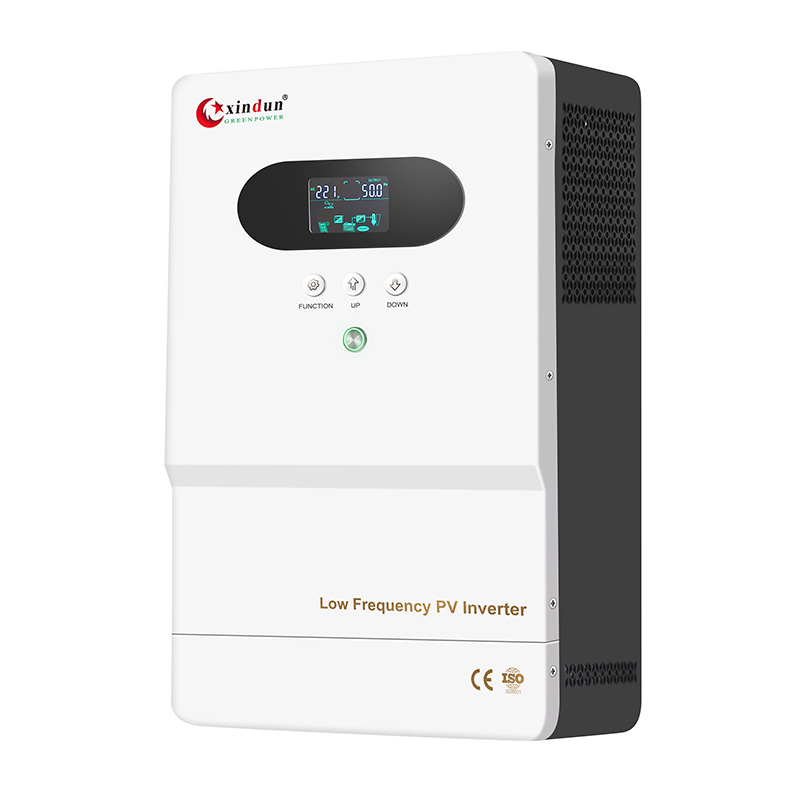
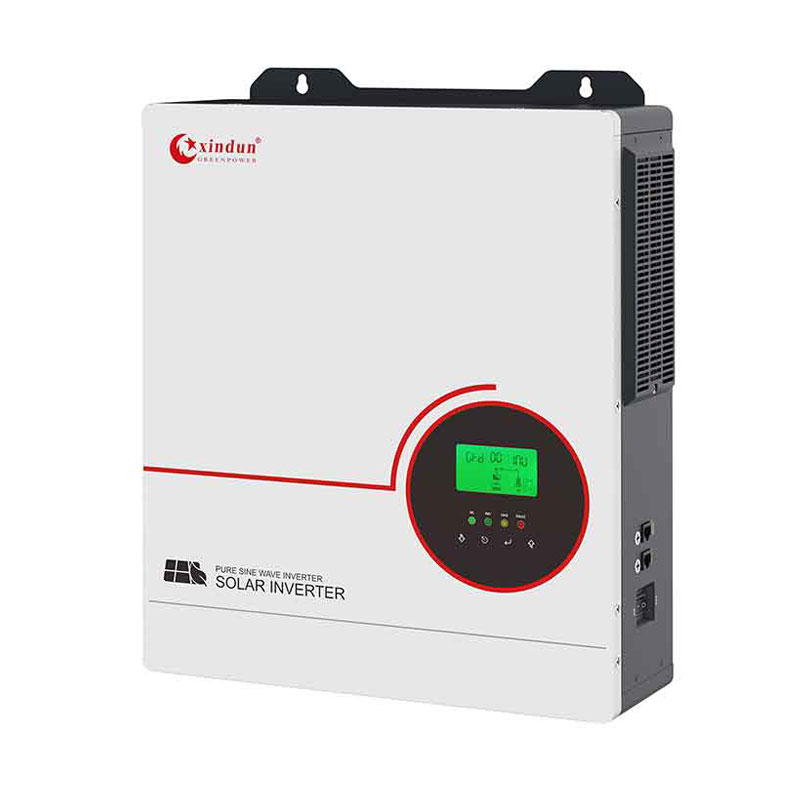
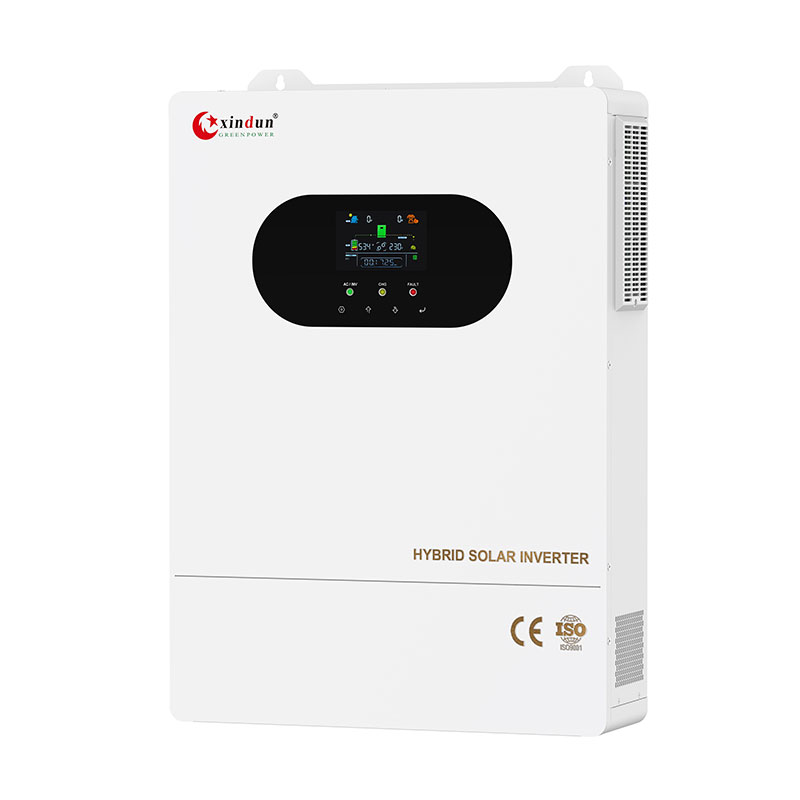
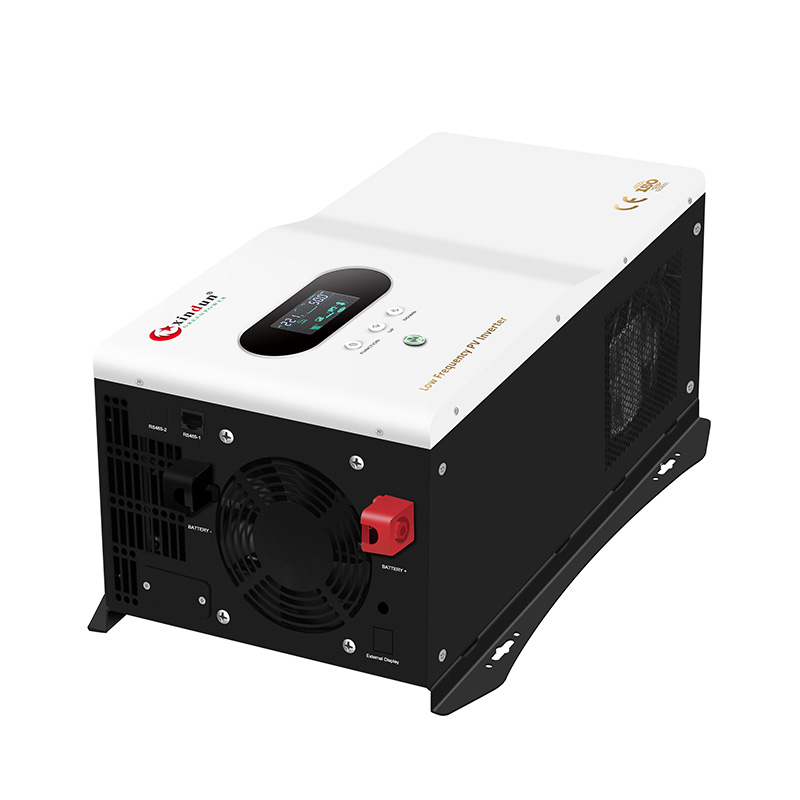
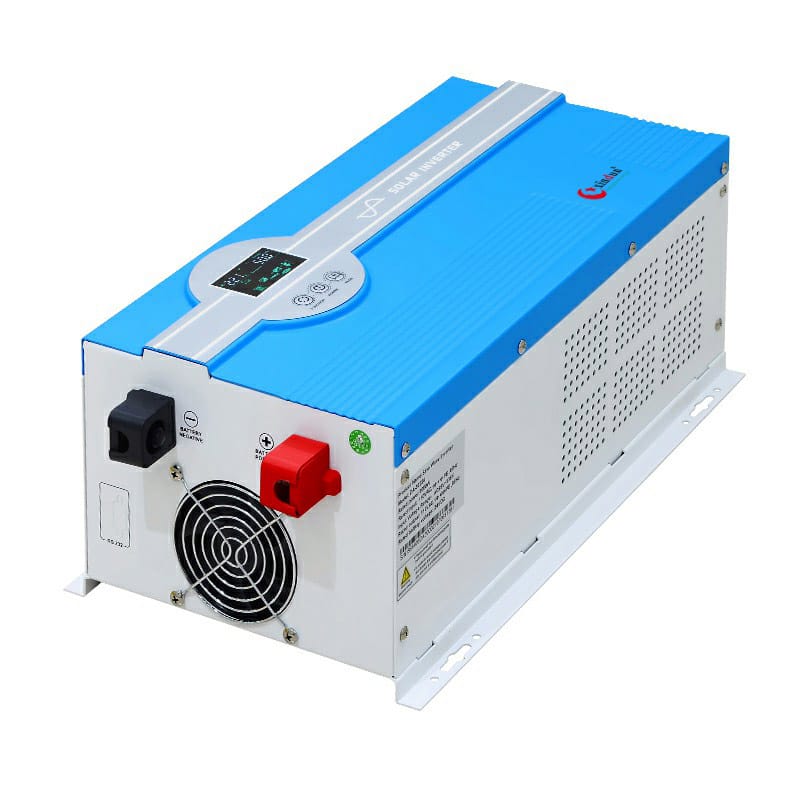
Xindun's hybrid inverters cover a power range from 1kW to 15.3kW, suitable for residential energy storage and small-to-medium commercial installations. WiFi monitoring comes standard across the entire lineup, providing real-time data viewing, remote parameter adjustment, and fault alerts via a mobile app. The MPPT tracking voltage range is wide (minimum 40V for 24V models, 80V for 48V models), compatible with various solar panel configurations. Output is pure sine wave, with dual main/auxiliary outputs for independent load control. The units support grid-connected, off-grid, and hybrid modes with seamless switching. Communication interfaces include RS485 and dry contact signals for integration with third-party monitoring systems.
Xindun's wifi inverter solar models carry CE certification and meet market access requirements for Europe, Southeast Asia, Africa, and other regions. Pre-sales support includes system design assistance, and the after-sales engineering team provides technical backup. These units are already running reliably in numerous projects worldwide.
Practical steps before placing your order
Once you've shortlisted a few suppliers, take these steps to avoid unnecessary headaches.
1. Test a sample unit in real-world conditions. Don't rely on spec sheets alone. Run the unit for at least 48 hours under your typical load profile. Test WiFi connectivity in an actual network environment — the factory lab environment is usually too ideal and won't reveal real-world issues.
2. Download the app and use it yourself. Check the user interface and logic. Is it intuitive? If you serve overseas markets, confirm whether multi-language support is available. Also test how many devices can be linked to one account, whether both Android and iOS versions are stable, and if fault alerts arrive promptly.
3. Clarify warranty terms. How long is the warranty period? (Aim for at least 3-5 years.) Who covers shipping costs for warranty repairs? What's the typical replacement turnaround? Is there a loaner unit available? How are spare parts handled? Get everything in writing.
4. Verify certifications. Request scanned copies of certificates that match your specific model. Confirm they are valid and cover your target market's regulatory requirements.
5. Ask existing customers for feedback. If possible, connect with customers in your region who run similar projects. Their real-world experience with product reliability and after-sales support will tell you more than any brochure.
Summary
So, which Chinese inverter manufacturers produce WiFi inverters with remote monitoring? Top players like Huawei and Sungrow lead the market, while mid-sized specialists like SAJ and Xindun offer their own strengths. There's no single "best" choice — your project positioning determines the right fit: brand power or customization flexibility.
If you're looking for a reliable wifi inverter solar solution with solid hardware, practical monitoring features, and OEM/ODM support, Guangdong Xindun Power Technology is worth a closer look.
 China MPPT Solar Inverter Manufacturers – A Procurement Guide
 Top Selling Products













 WeChat
 Email
Email WhatsApp