
 Solar Inverter
 Hybrid Inverter
 Power Inverter
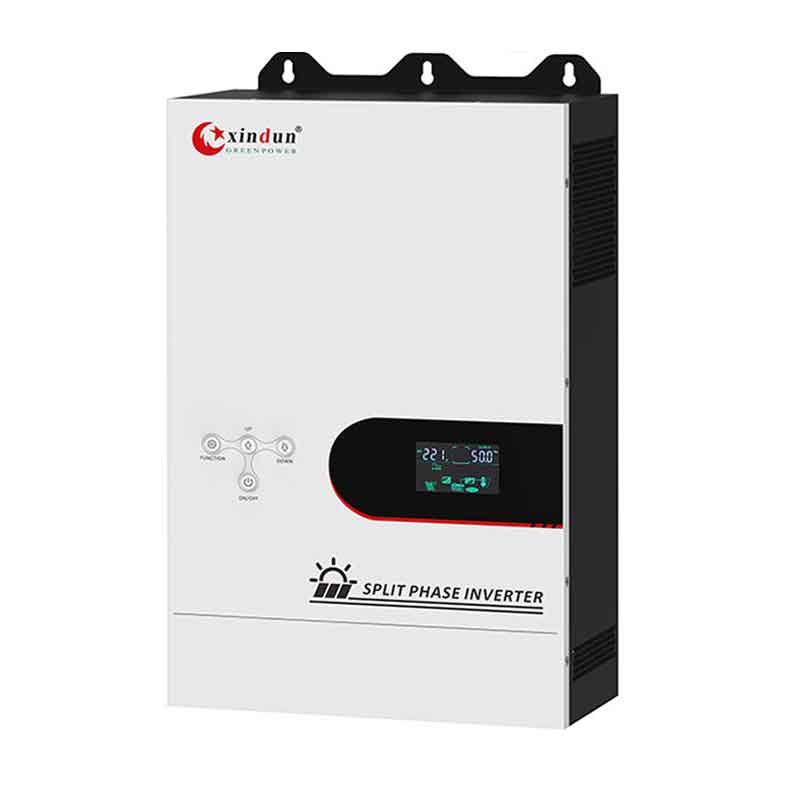
 Split Phase Inverter
 Energy Storage Inverter

 3 Phase Inverter
 Solar System Kits
 Solar Charge Controller

 Solar Battery
 Asia
Asia
 Africa

 South America
 Europe
 North America

 Oceania & Antarctica


 Inquire

 Home
HomeSplit-Phase Hybrid Inverter: 4 Charging Modes for Battery Energy Storage System
 Jul 17,2026

 XINDUN
In the architecture of off-grid and hybrid solar storage systems, the charging mode of the inverter is not merely a setting—it is the core logic that determines battery replenishment efficiency, the Levelized Cost of Electricity (LCOE), and the cycle life of your battery bank. For any Battery Energy Storage System (BESS), selecting the right charging mode is the foundation of optimal performance. Whether you are designing a residential backup or a large-scale BESS project, understanding how each charging mode impacts your system is essential to maximizing return on investment.
In our previous technical brief, we analyzed the operational logic of the Xindun HU US Standard Split-Phase Hybrid Inverter in "Hybrid Mode." Today, we dive deeper into the standalone charging strategies. For system integrators and project owners, mastering these priorities is the key to unlocking system reliability and ROI. This is especially critical when deploying a Split-Phase Hybrid Inverter in US-standard 120V/240V installations, where the right charging strategy directly impacts the overall performance of your Battery Energy Storage System.
The 4 Charging Modes at a Glance
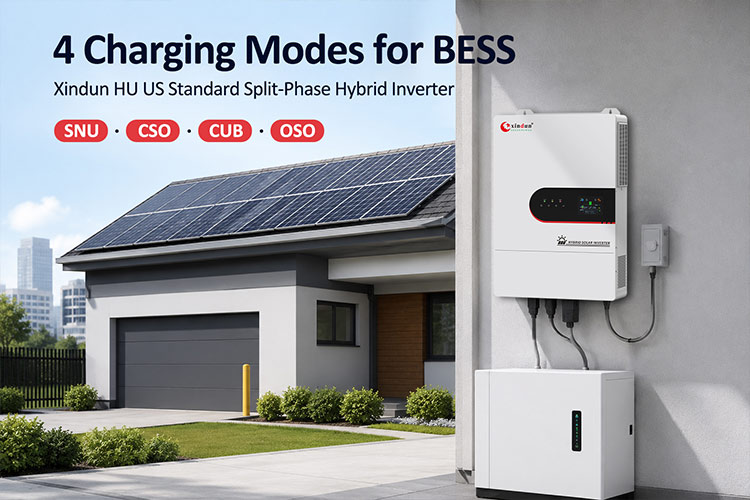
The Xindun HU inverter offers four distinct charging algorithms for off-grid photovoltaic systems and grid-tied installations alike:
· SNU (Solar + Grid Hybrid Charging)
· CSO (Solar Priority Charging)
· CUB (Grid Priority Charging)
· OSO (Solar-Only Charging)
Understanding the priority logic of each mode is critical for programming the energy management system.
Detailed Analysis of Charging Priority Logic
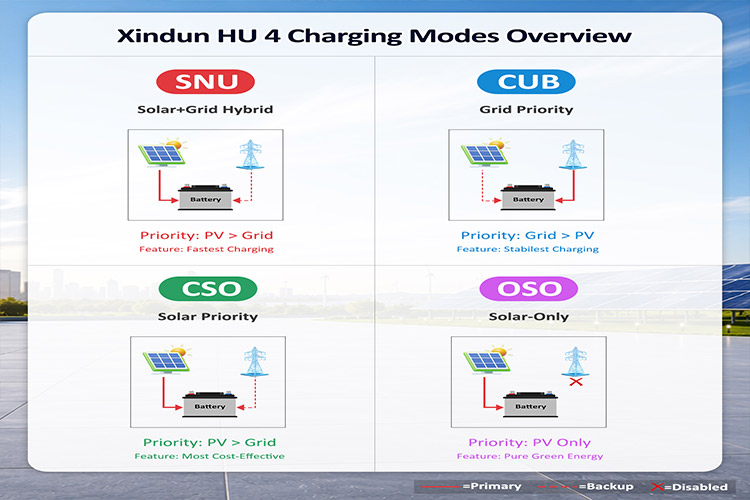
1. SNU Mode: Solar + Grid Hybrid Charging (Fastest Recharge)
Priority Logic: Solar (PV) > Grid (AC)
In this mode, both solar panels and the utility grid charge the battery simultaneously. The system prioritizes PV as the primary source. If PV generation drops (e.g., due to passing clouds), the grid instantly supplements the shortfall without interruption. If PV is sufficient, the grid remains on standby, contributing zero power.
Core Advantage: This yields the highest charging speed and shortest charging time. The dual-source redundancy ensures zero downtime in charging cycles.
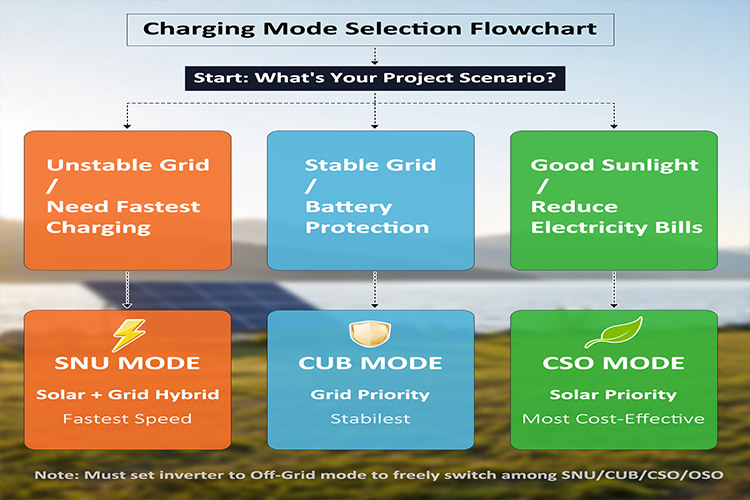
Best For: Regions with unstable grid infrastructure; sites requiring rapid battery top-ups during short grid-availability windows; applications demanding 24/7 high-efficiency charging.
Critical Constraint: If the inverter is set to "Hybrid" or "Grid-Tied" operating mode, the system automatically locks to SNU and disables switching to other charging modes. To flexibly select modes CSO, CUB, or OSO, you must set the inverter to Off-Grid mode. This Off-Grid mode setting unlocks the full flexibility of the inverter's charging logic.
2. CUB Mode: Grid Priority Charging (Stability Focused)
Priority Logic: Grid (AC) > Solar (PV)
This mode designates the utility grid as the absolute primary charging source. The system charges the battery from the grid regardless of solar availability. Solar charging only activates as a backup when the grid is completely down.
Core Advantage: Provides a completely stable and ripple-free charging curve, independent of weather fluctuations. This smooth DC input significantly reduces battery stress, minimizes heat generation, and extends the battery's overall lifespan.
Best For: Regions with highly stable grid coverage; commercial sites or residential backup systems, as well as off-grid solar storage systems that occasionally rely on grid backup, where keeping the battery at 100% SoC (State of Charge) is mission-critical, regardless of solar yield.
3. CSO Mode: Solar Priority Charging (Cost-Effective)
Priority Logic: Solar (PV) > Grid (AC)
Solar energy is the primary workhorse. The system utilizes PV exclusively for battery charging whenever solar radiation is sufficient. The grid only intervenes when solar energy is entirely unavailable—typically at night or during heavy overcast conditions.
Core Advantage: Maximizes solar self-consumption, drastically reducing grid electricity draw. This mode delivers the lowest operational expenditures (OPEX) and maximizes the carbon offset of the installation.
Best For: Regions with high solar insolation; areas with high Time-of-Use (TOU) electricity rates; residential and small-scale C&I (Commercial & Industrial) projects focused on green energy ROI; and off-grid photovoltaic systems where maximizing solar harvest is the primary goal.
4. OSO Mode: Solar-Only Charging (True Off-Grid)
Priority Logic: Solar (PV) Only (Grid Disabled for Charging)
This mode is exclusively designed for pure off-grid scenarios, making it the ideal choice for off-grid photovoltaic systems where no utility grid is available. As a true Off-Grid mode, the battery is charged entirely via solar power, with the grid completely isolated from the charging circuit.
Core Advantage: Zero grid dependency; pure green energy storage. Achieves absolute zero consumption of utility power for charging purposes.
Best For: Remote mountainous regions, offshore island projects, mobile field operations, and DIY off-grid cabins where grid access is unavailable, or where the user demands 100% renewable energy self-sufficiency.
Conclusion: Selecting the Right Mode for Your Project
The Xindun HU series offers these four distinct modes to fit specific project needs, whether you are designing a grid-tied commercial array or a remote off-grid solar storage system. No matter the application, proper charging mode selection ensures your Battery Energy Storage System operates at peak efficiency.
The golden rule for installers is to match the Charging Mode with the Unit's Operating Mode (Off-Grid/Hybrid/Grid-Tied). By aligning these settings with the site’s specific irradiance levels and grid stability, you can maximize PV utilization, minimize electricity bills, protect battery health, and ensure the long-term reliability of the entire off-grid photovoltaic system or grid-tied solar storage installation.
Note: While this guide uses the Xindun HU as a reference, charging features vary across manufacturers. Always cross-reference the specific technical manual of the inverter model to understand the exact interaction between its operating modes and charging logic.
Recommended Solution: Xindun HU Split-Phase Hybrid Inverter (10kW/12kW)
The Xindun HU series is a high-frequency Split-Phase Hybrid Inverter delivering pure sine wave output, purpose-built for Battery Energy Storage System applications ranging from residential to commercial scale. It supports both Split-Phase (120V/240V) and Single-Phase (110V/220V) configurations.
Key Technical Specifications for dealers:
·Flexible Operation: Supports Hybrid, Off-Grid, and Grid-Tied modes with seamless switching, with the Off-Grid mode offering full parameter customization.
·No Battery Option: Allows for "Battery-less" operation, saving initial CAPEX if required.
·Triple Energy Backup: PV + Grid + Battery work in synergy to ensure 24/7 load protection.
·Time-of-Use (TOU) Settings: Allows for peak-load shaving and time-shifting energy storage to combat high tariff periods.
·Parallel Scalability: Supports up to 6 units in parallel, scaling total output to 60kW/72kW.
4 Parallel Output Types: Offers flexibility for Single-phase, Two-phase Split-phase, and Three-phase output expansion.
Whether for residential villa projects, off-grid solar storage systems, or small-to-medium commercial facilities, the Xindun HU offers robust, scalable power protection.
Need OEM/ODM specifications or a customized energy storage solution for your next project? Leave your project requirements via the contact form below, or reach out directly to our sales engineering team.
 Which Chinese manufacturers produce WiFi inverters with remote monitoring?
 Top Selling Products













 WeChat
 Email
Email WhatsApp