
 Solar Inverter
 Hybrid Inverter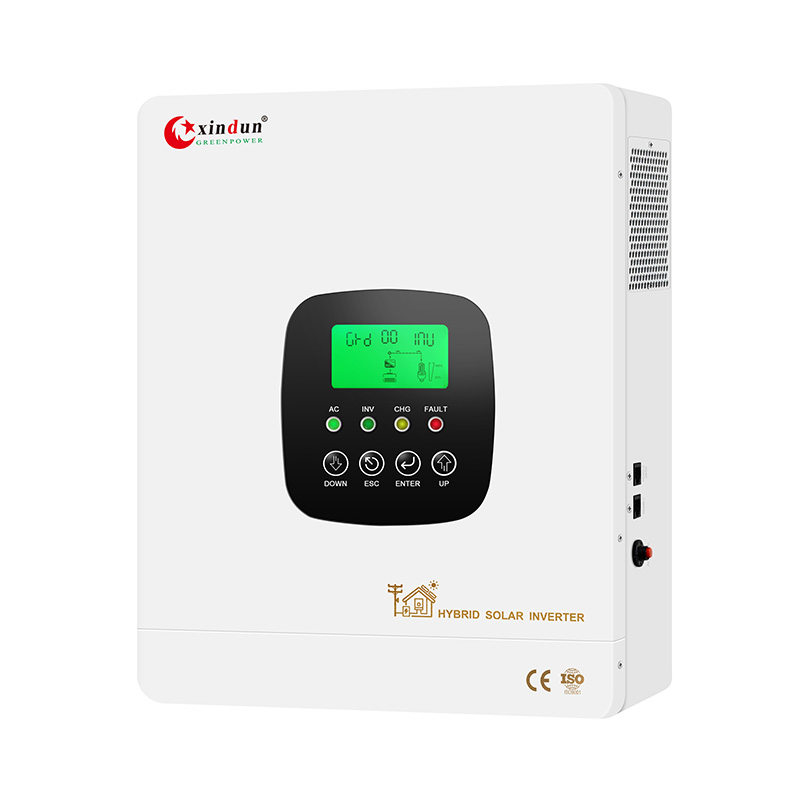
 Power Inverter
 Split Phase Inverter
 Energy Storage Inverter

 3 Phase Inverter
 Solar System Kits
 Solar Charge Controller

 Solar Battery
 Asia
Asia
 Africa

 South America
 Europe
 North America
 Oceania & Antarctica


 Inquire
 Home
HomeWhich Charging Priority Is Best for Your Hybrid Inverter Off Grid System?
 Aug 12,2026

 XINDUN
The long-term stability of any hybrid inverter off grid system depends largely on proper configuration. In off-grid mode, operating mode and output priority are the fundamental settings. Once those are set, charging priority becomes the final decision that determines system performance—directly impacting solar energy utilization and battery lifespan.
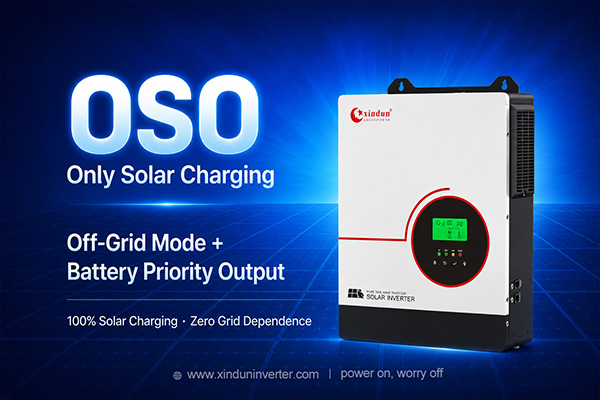
For off-grid installations with no utility access, the two most critical settings for a hybrid inverter off grid system are the operating mode and output priority. Our analysis confirms that, in long-term grid-free scenarios, the optimal configuration for any hybrid inverter off grid installation is Off-Grid Mode combined with Battery Priority Output. This brings us to the third and final critical configuration: charging priority, a key aspect of off-grid charging strategy. This choice is equally vital to system efficiency and battery longevity, making it an essential consideration for anyone managing off-grid charging with a hybrid solar inverter.
Taking the Xindun HFU US-standard single-phase on off grid hybrid solar inverter as an example, it offers three charging priority options: SNU Charging Mode (PV + Utility Hybrid Charging), CSO Charging Mode (PV Priority Charging), and OSO Charging Mode (Solar-Only Charging). Each of these charging priority settings corresponds to a completely different strategy for battery replenishment. In an off-grid, no-utility-power scenario, the choice directly determines whether the battery can be effectively charged and whether solar energy can be fully utilized. Understanding how each mode affects off-grid charging is crucial for system optimization.
Hybrid Inverter Charging Priority: Three Modes Explained
SNU Hybrid Charging: PV and utility power charge the battery simultaneously. When sunlight is available, PV is prioritized for off-grid charging. When PV power is insufficient, utility power automatically supplements the remaining charging current. While this mode offers flexibility, it is not ideal for pure off-grid applications.
CSO PV Priority Charging: When sunlight is available, only PV is used for battery charging priority. Utility power only intervenes when there is no PV (at night / on cloudy or rainy days), activating utility power to charge the battery. This mode provides a balanced approach for users who may have future grid access.
OSO Solar-Only Charging: Throughout the entire process, only solar PV energy is used to charge the battery. Utility power does not participate in the off-grid charging process at all. This is the ultimate charging priority setting for pure off-grid scenarios.
After a comprehensive comparison, only the OSO Solar-Only Charging mode meets the requirements of a "no-grid" purely off-grid scenario. With utility power completely excluded from the off-grid charging process, it perfectly matches the Off-Grid Mode. For any hybrid inverter off grid system, this is the most thorough, purest, and most efficient charging priority strategy. If the user anticipates having utility grid access available as a backup in the future and wishes to reserve the utility-switching function, then the CSO PV Priority Charging mode is recommended—using PV charging during the day and utility charging at night, balancing flexibility and energy utilization. This alternative charging priority setting offers a practical compromise for transitional scenarios.
Conclusion
In off-grid, no-utility-power scenarios, the logic for selecting charging priority aligns consistently with the selection of output priority. The core principle is to completely eliminate all dependence on utility power, making off-grid charging entirely self-sufficient.
Adopting the combined strategy of "Off-Grid Mode + Battery Priority Output + OSO Solar-Only Charging" enables maximum self-consumption of solar power and completely breaks reliance on the utility grid. This combination is highly suitable for purely off-grid applications such as remote mountainous areas, isolated islands, RVs, and other locations without grid access. Whether you are configuring a new hybrid inverter off grid system or optimizing an existing one, the right charging priority makes a significant difference.
Selecting the appropriate mode and parameter configurations for your on off grid hybrid solar inverter based on different scenarios not only allows the solar power system to operate more in line with usage habits, but also effectively reduces battery cycle wear, extends overall system lifespan, and truly delivers a reliable off-grid power experience.
Xindun Hybrid Inverter Recommendations
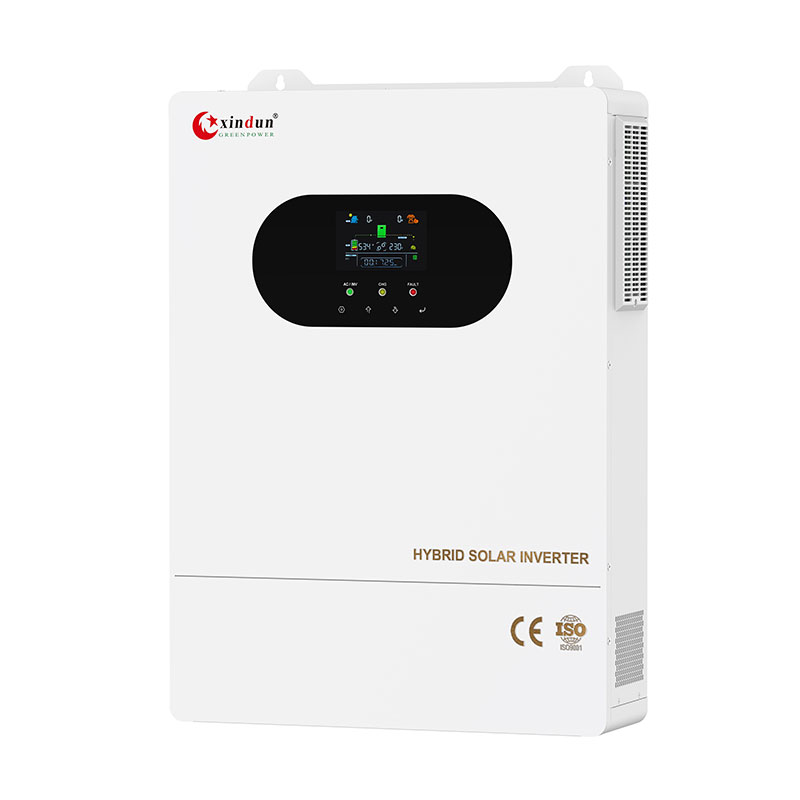
The Xindun HFU US-standard Single-Phase Hybrid Inverter (1.8kW / 3.3kW / 6.3kW) is a US-standard single-phase on off grid hybrid solar inverter specifically designed for regions with American voltage standards. It delivers AC 120V or 110V US-standard output. It supports Hybrid / Off-Grid / Grid-Tied modes with flexible switching among the three modes, and also supports battery-less operation. With high-frequency pure sine wave output and coordinated hybrid complementation among PV / Utility / Battery, it provides triple energy security: during the day with sufficient sunlight, it is powered entirely by PV; when sunlight is insufficient, PV + utility power supply complement each other; when both PV and utility are unavailable, the battery discharges, ensuring uninterrupted, stable power supply to your loads around the clock. This makes it an excellent choice for any hybrid inverter off grid deployment.
In addition to the Xindun HFU series, the Xindun HFP, HFP-C, HFP-E, HFP-S, and other series are also on off grid hybrid solar inverter models. They all deliver AC 220/230/240V output and feature all the same functions as the Xindun HFU series, providing reliable off-grid charging capabilities across various power requirements.
Beyond the HFP series, the HFP-C, HFP-E, and HFP-S series also add a dual-output function: the AC main and sub-outputs can independently power loads, or simultaneously power loads. Through balanced intelligent power supply, they can provide power to different devices at the same time, flexibly meeting users' multi-load usage needs and achieving more rational power distribution.
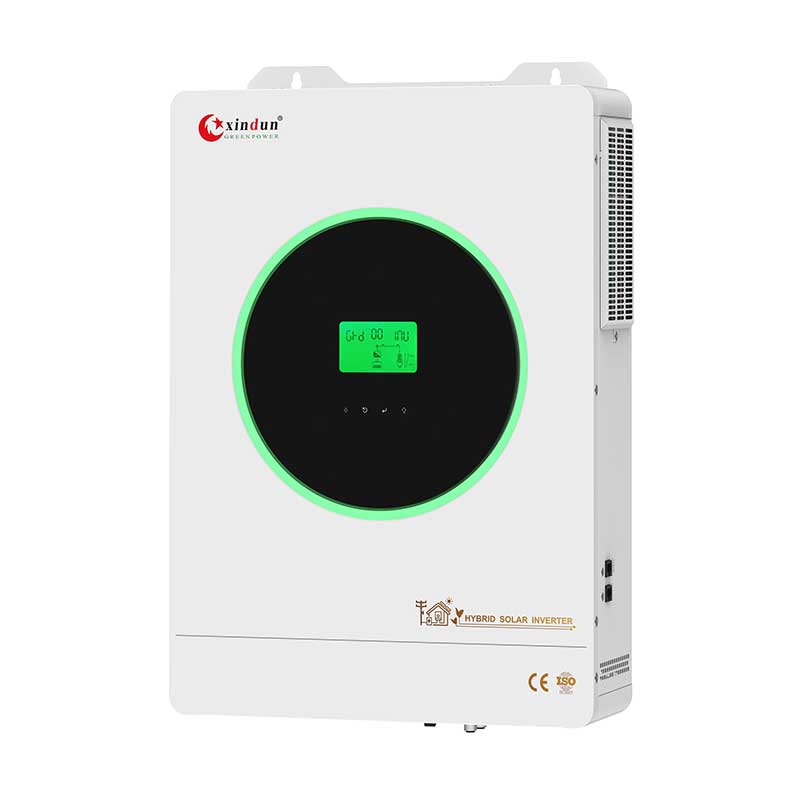
Among them, the Xindun HFP-C Dual-Output Hybrid Inverter (4.3kW–12.3kW) features a circular LED RGB indicator light strip design, with a unique RGB light strip that provides intelligent color indication, and 8 colors that can be customized.
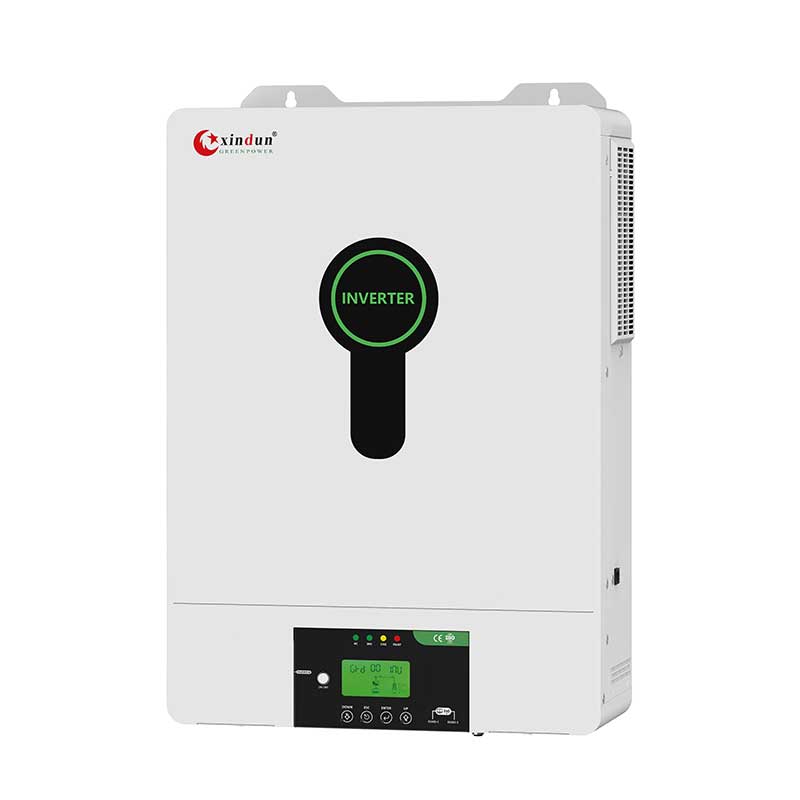
The Xindun HFP-E Dual-Output Hybrid Inverter (3.3kW–12.3kW) features a detachable screen design. The screen module supports external, remote connection. Users can easily remove the display panel of the inverter according to actual application needs and flexibly install it in locations convenient for observation, operation, and monitoring management.
If you would like to learn more about Xindun on off grid hybrid solar inverter products, you are welcome to leave your information and requirements in the customer service window at the bottom of our website. Xindun will get back to you as soon as possible during working hours.
 How to Choose the Right Hybrid Inverter Output Priority?
 Top Selling Products













 WeChat
 Email
Email WhatsApp