
 Solar Inverter
 Hybrid Inverter
 Power Inverter
 Split Phase Inverter
 Energy Storage Inverter

 3 Phase Inverter
 Solar System Kits
 Solar Charge Controller

 Solar Battery
 Asia
Asia
 Africa

 South America
 Europe
 North America
 Oceania & Antarctica


 Inquire
 Home
HomeXindun Case Study: HU Split Phase Inverter | Photovoltaic Brazi
 Jul 13,2026

 XINDUN
José, a distributor in São Paulo state, has been distributing photovoltaic equipment for five years, but recently he's had three orders returned in a row—all due to voltage issues. Customers said on the phone, "We use 220V here," but when the machine arrived on-site and was tested, it was actually 120V. The back-and-forth returns and exchanges have caused customers to complain, and now they're losing profits.
He later said, "When I sell an inverter, I have to ask the customer what voltage their home is. But the customers can't say for sure, they just say 'it's just regular electricity.'"
This is a typical day for Brazilian distributors. The photovoltaic market in Brazil is booming, but unstable voltage and grid conditions make conventional inverters unsuitable for the job — and that's when the complaints start.
But it doesn't have to be that way. For Xindun's distributor in São Paulo, the reality looks different: bulk shipments arriving on schedule, systems running steadily, and the after-sales hotline barely ringing. That's the result of switching to a product that actually matches the local grid. And that's why they keep coming back for more.
This case study demonstrates how the Xindun HU series split-phase inverter — with its dual-voltage output capability — solved two core problems for a Brazilian distributor: voltage mismatch and grid instability.
I. Brazilian Market: Photovoltaic Boom Continues, But Voltage Chaos Remains
Brazil's distributed photovoltaic (PV) installations have grown from less than 1 GW in 2018 to 40 GW, accounting for 43% of new power generation capacity, making it the country's fastest-growing energy source. Photovoltaic adoption in Brazil has seen remarkable growth, and the country ranks among the top Photovoltaic markets in Latin America.
However, behind this rapid market growth, distributors face a dilemma in selling inverters:
First, there is no uniform voltage standard. Brazil does not have a nationally unified voltage standard. Most areas of São Paulo and Rio de Janeiro use 120V, while Santos, Niterói and other places use 220V. In other words, Brazil solar power installations require different voltage configurations depending on the location. When dealers receive orders, they have to confirm which voltage is used in the customer's city, but the customers themselves are not sure. Sending the wrong goods is equivalent to working for nothing.
Secondly, the stability of the power grid is worrying. In August 2023, a 500kV line trip resulted in a 23,368MW load interruption, accounting for about 31% of the total national demand. During the rainy season, voltage fluctuates frequently, and conventional inverters trip protection frequently, sometimes several times a day. This is a significant challenge for photovoltaic Brazil projects. All customers see is "less power generation", followed by complaint calls.
II. HU Series Split-Phase Inverter: One Machine Solves Two Problems
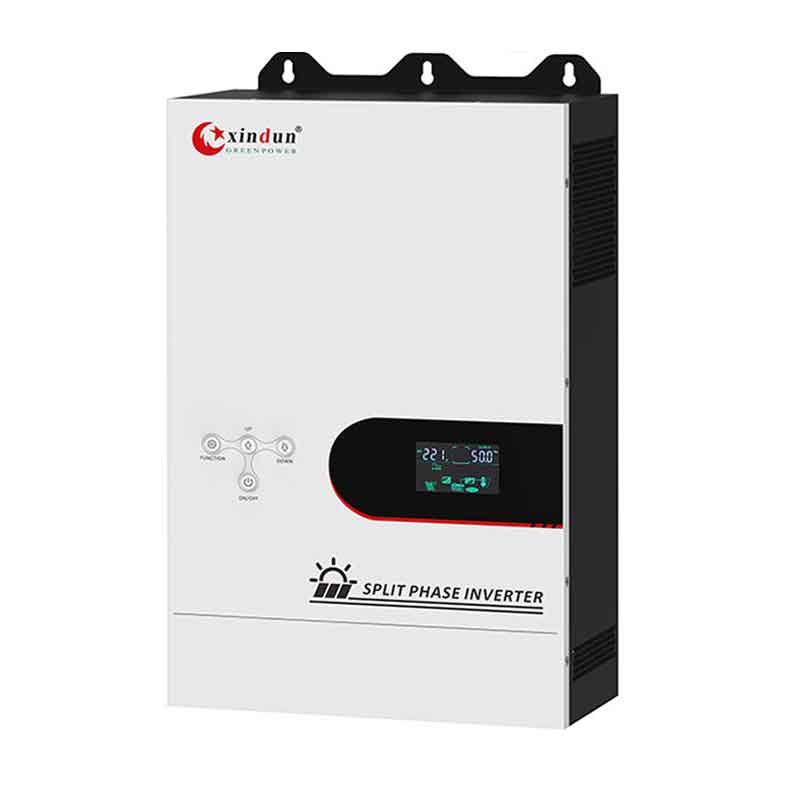
To address these two core issues, we recommended the Xindun HU series split-phase inverter to our Brazilian distributor. This 120 240 split phase inverter is specifically designed for markets like Brazil where dual-voltage support is essential.
Regarding voltage — HU supports split-phase operation mode, with one machine simultaneously outputting 120V for L1-N, 120V for L2-N, and 240V for L1-L2. As a true 120v 240v inverter, it handles both voltages in a single unit. With both live wires and one neutral wire connected, the machine automatically adapts to the customer's voltage (120V or 220V), eliminating the need for prior inquiry or guesswork. This saves distributors a step and simplifies inventory management.
Regarding the power grid — HU supports free switching between three modes: hybrid, off-grid, and grid-connected. It operates in grid-connected mode when the grid is normal, and automatically switches to off-grid mode to continue supplying power during voltage fluctuations or power outages, without tripping or shutting down. Customer power generation remains unaffected, naturally reducing complaints from dealers.
The core parameters are as follows:
| Core Parameters | Specification |
| Rated Power | 10KW / 12KW |
| Output Method | Single-phase / Split-phase (L1-N=120V, L2-N=120V, L1-L2=240V) |
| Dual Voltage Output | Supports both 110V & 220V and 120V & 240V |
| Operating Modes | Hybrid / Off-grid / Grid-connected — three modes switchable |
| Battery-free Operation | Supported (can run without battery when not in parallel) |
| Parallel Expansion | Up to 6 units, total output up to 60KW/72KW |
| Protection Rating | IP20 (Indoor Wall-Mounted) |
| Timed Charge/Discharge | Supported — programmable scheduling for peak shaving |
III. About Xindun
Founded in 2006, Xindun Power owns a factory of over 10,000 square meters and exports its products to more than 100 countries. With deep expertise in inverter voltage technology, Xindun has been serving Photovoltaic energy Brazil and global markets for nearly two decades.
In August 2025, Xindun participated in The Smarter E South America exhibition in São Paulo, Brazil, showcasing products such as the HFP hybrid inverter, the LU low-frequency split-phase inverter, the ESS-Li all-in-one photovoltaic generator, and the WF series high-power inverter — with the 15KW-40KW models also supporting split-phase output. Several local distributors expressed strong interest in the dual-voltage output of our split-phase inverters — the feedback was direct: "This split-phase inverter is exactly what the South American market needs."
We are not a remotely controlled manufacturer. Xindun has indeed been to Brazil and spoken face-to-face with local distributors, so we know how troublesome the inverter voltage issues are here. As a trusted partner in Brazil's photovoltaic sector, we understand the local challenges firsthand.
IV. Customer Feedback
José, the São Paulo dealer, quickly placed his first order after learning about the HU series. He said:
"In the past, when selling an inverter, I had to ask the customer what voltage they used. Now, HU directly splits the phase to output two voltages — a true 120v 240v inverter — so I don't have to ask anymore. It saves a whole step."
"The system automatically switches to off-grid during power fluctuations, so customers don't call me, and I don't have to go out. Since we started bulk shipping, the after-sales hotline has barely rung."
V. Cooperation Model
Xindun's approach is simple: you state your needs, and we'll implement them.
Product Customization: Appearance, trademark, voltage, and power can all be adjusted according to customer requirements
Order Threshold: No minimum order quantity required; small and medium-sized traders are encouraged to place trial orders first
Production Guarantee: Own factory with stable production capacity and controllable delivery cycles
Certification Services: CE, IEC and other certifications tailored to target markets
Technical Collaboration: Solution design and technical support for specific projects
No matter how big your business is, Xindun's cooperation level remains flexible.
VI. Conclusion
The core pain point for the inverter business in the Brazilian market is not "whether the power is large enough", but "whether the voltage is correct and whether the grid is stable."
Before selling a conventional inverter, you need to confirm the voltage; after selling it, you need to withstand grid fluctuations — a dealer has to worry about two things when selling one machine.
The HU series split-phase inverter — a true 120v 240v inverter — covers both voltages in one unit, with three working modes to flexibly cope with grid fluctuations. Dealers just sell. The machine handles the rest.
VII. Next Steps
If you are trading inverters in the Brazilian or South American market, you need a product that is voltage-compatible, grid-resilient, and flexible in cooperation:
Click the button below to speak directly with a business manager.
Please mention "Brazil Case" in your inquiry for priority connection to a dedicated account manager.
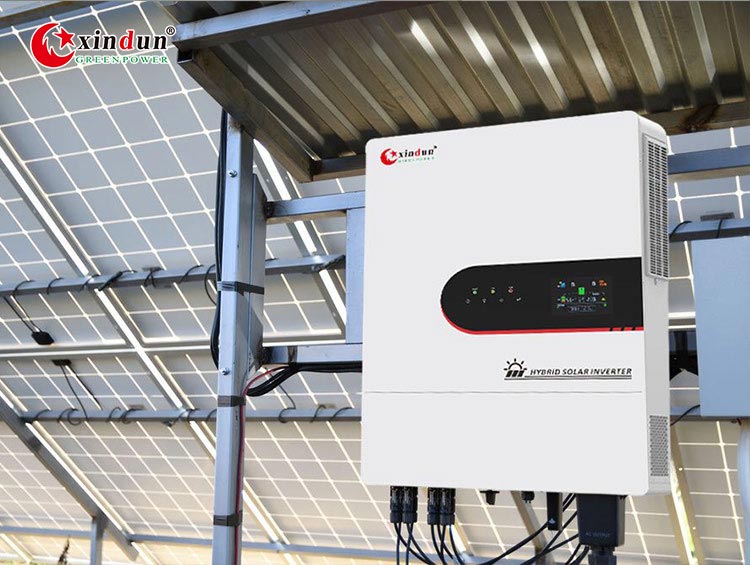
 HFU Series Single-Phase Hybrid Inverter for Mexico Solar PV Market
 Related Application
 Top Selling Products













 WeChat
 Email
Email WhatsApp