
 Solar Inverter
 Hybrid Inverter
 Power Inverter
 Split Phase Inverter
 Energy Storage Inverter

 3 Phase Inverter
 Solar System Kits
 Solar Charge Controller

 Solar Battery
 Asia
Asia
 Africa

 South America
 Europe
 North America
 Oceania & Antarctica


 Inquire

 Home
HomeInverter Modes Explained: Inverter Hybrid Off Grid Setup Without the Grid | Xindun
 Jul 25,2026

 XINDUN
For residential solar installers and system integrators, the question isn't just about power output—it's about adaptability. While Hybrid inverters are the gold standard for home solar systems, a common scenario often puzzles even experienced technicians: Which operating mode should a Hybrid inverter use when there is no utility grid available?
At Xindun, we understand that flexibility is non-negotiable for B2B partners. Our US standard single-phase Hybrid inverters (like the HFU series) support three distinct inverter modes (Hybrid, Off-Grid, and Grid-Tied) and output 110V or 120V AC. But selecting the right mode without a grid requires a deep dive into core inverter logic—especially when you're setting up an inverter hybrid off grid system in remote locations. Choosing the right off grid hybrid inverter is the first step to a successful installation.
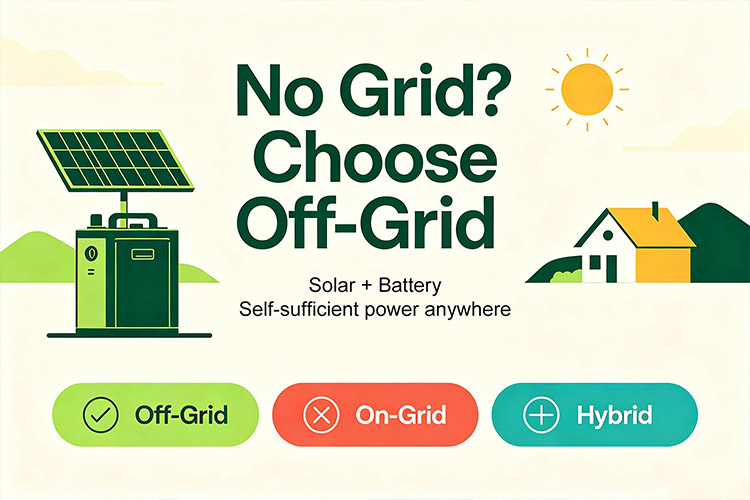
1. Decoding the Core Logic: 3 Inverter Modes
To make the right call, we must first strip back the jargon and look at the energy dispatch strategy for each of the three inverter modes.
Grid-Tied Mode
Core Logic: PV powers the load first, then charges the battery. Excess energy is sold back to the grid.The Catch: This mode is 100% grid-dependent. It requires a stable grid to sync frequency and phase for safe feed-in. If there is no grid, the inverter has no reference point and will typically shut down or refuse to export. Verdict: Not suitable for gridless scenarios—this is not how an inverter hybrid off grid should be configured.
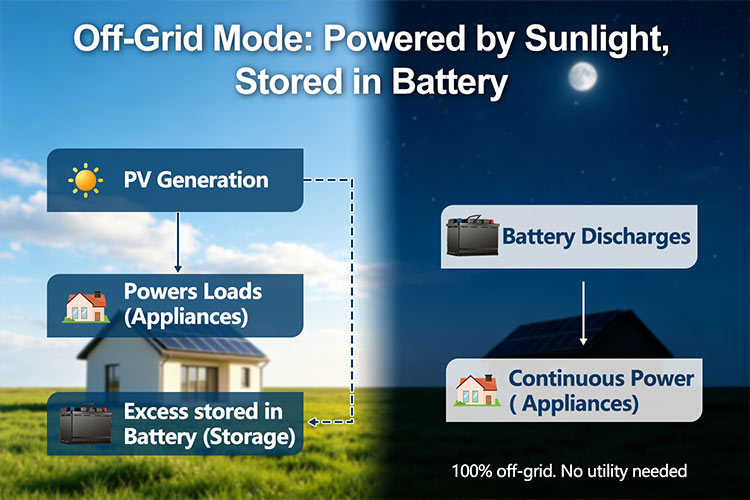
Off-Grid Mode
Core Logic: This mode treats the grid as non-existent. PV is the primary source; excess goes to the battery. When PV is insufficient, the battery discharges to cover the load.
The Detail: The grid is merely a "standby" option here. The system will only draw from the grid if the battery is completely depleted, but in a gridless scenario, it simply runs as a standalone microgrid. The core inverter logic here is pure self-sufficiency.
Hybrid Mode
Core Logic: PV powers the load first. If PV is insufficient, the grid automatically supplements the shortage.
The Detail: Important: If PV exceeds the load, surplus energy charges the battery—it does NOT feed back to the grid. This mode offers seamless backup, but it constantly "looks" for the grid. For those wondering how to run aninverterhybrid off grid without tripping grid-detection errors, this mode requires careful consideration.
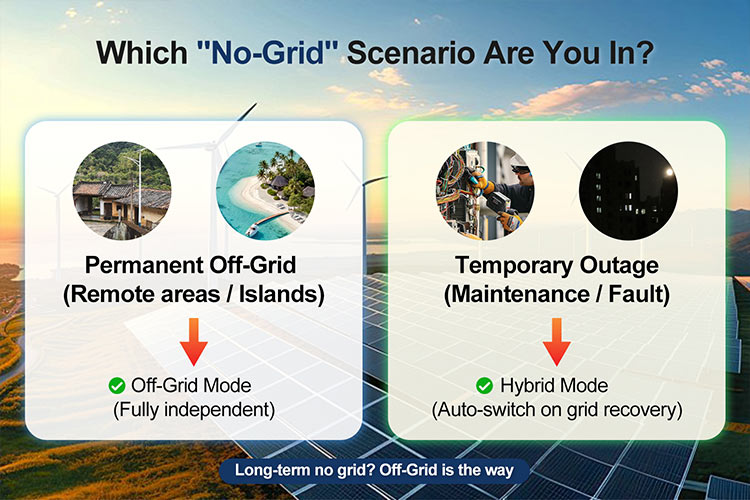
2. The Core Distinction: Is It a "Permanent Off-Grid" or a "Temporary Outage"?
If you are working without a grid, you can immediately rule out Grid-Tied Mode. But the choice between Hybrid and Off-Grid inverter modes depends on one critical factor: Is the absence of mains power a permanent state or a temporary interruption?
Scenario A: Permanent Off-Grid (Remote Mountains, Islands, or Rural Farms)
Recommendation: Off-Grid Mode.
Why? This mode is engineered for autonomous operation. It doesn't waste processing power monitoring grid status, nor does it trigger nuisance alarms due to the grid's absence. The PV-battery dispatch inverter logic is optimized purely for self-sufficiency, ensuring system stability without the "parasitic" drain of grid-detection circuits. This is the optimal solution for anyinverterhybrid off grid installation in remote areas. A properly configured off grid hybrid inverter ensures maximum system uptime and energy efficiency.
Scenario B: Temporary Power Outage (Unstable Grid or Scheduled Blackouts)
Recommendation: Hybrid Mode.
Why? Hybrid mode offers the flexibility of auto-recovery. When the mains power returns, the inverter automatically recognizes this and switches back to bypass mode without manual intervention. You don't need to revisit the settings menu. This retains the convenience of grid compatibility while perfectly handling short-term outages—making it one of the most versatile inverter modes for grid-unstable regions.
3. The Next Step: Beyond Mode Selection
Choosing the operating mode is just the foundation. To truly maximize PV utilization in a gridless state, you must also pair this selection with the correct Output Priority and Charging Strategy. Whether you're using an Inverter off grid or hybrid unit unit in backup mode, these parameters determine how efficiently your system runs.
For example, when operating aninverterhybrid off grid in Off-Grid Mode, setting Battery Priority ensures that surplus solar energy is stored for nighttime use rather than wasted. In Hybrid Mode, enabling OSO (Solar-Only Charging) prevents the inverter from drawing grid power to charge batteries—a smart move if you're aiming for maximum self-consumption.
(Stay tuned for our upcoming technical deep-dives on these specific parameters.)
4. Product Recommendations for System Integrators
For projects requiring a robust gridless solution in US voltage regions, the Xindun portfolio offers versatile options across all three inverter modes:
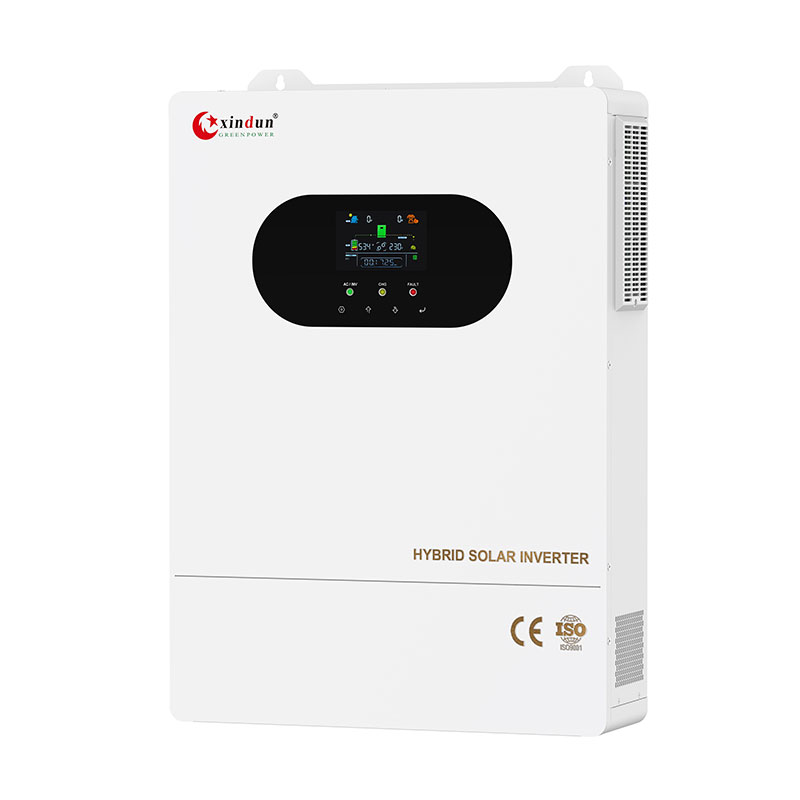
Xindun HFU US Standard Single-Phase Grid-Mixed Inverter (1.8kW / 3.3kW / 6.3kW)
Specifically designed for the US market, outputting 120V or 110V AC. It supports all three inverter modes (Hybrid/Off-Grid/Grid-Tied) and features high-frequency pure sine wave output. Even without batteries, it ensures a stable, uninterrupted power supply to your critical loads 24/7. This is the ideal choice when you need aninverterhybrid off grid that can also adapt to grid-tied operation when utility power becomes available.
Xindun HFP, HFP-C, HFP-E, HFP-S Series (220V/230V/240V)
For applications requiring higher voltage, these series offer all the smart features of the HFU. Notably, the HFP-C, HFP-E, and HFP-S models feature a Dual-Output function, allowing main and auxiliary AC outputs to operate independently. This is ideal for projects requiring smart power distribution across different loads.
| Series | Power Range | Key Feature |
| HFP-C Series | 4.3kW – 12.3kW | RGB LED indicator strip (8 colors) |
| HFP-E Series | 3.3kW – 12.3kW | Detachable screen module for remote monitoring |
| HFP-S Series | 3.3kW – 12.3kW | Dual-output standard configuration |
5. Final Recommendation
To summarize, here's a quick decision guide for choosing among the three inverter modes in gridless scenarios:
| Scenario | Recommended Mode | Why |
| Permanent off-grid (mountains, islands) | Off-Grid Mode | No grid detection, no false alarms, pure self-sufficiency |
| Temporary power outage | Hybrid Mode | Auto-recovery when grid returns, zero manual intervention |
| Grid available | Grid-Tied Mode | Maximize ROI through feed-in revenue |
For permanent off-grid installations, Off-Grid Mode is undoubtedly the optimal solution. For temporary outages, Hybrid Mode offers the best balance of flexibility and convenience. And if you're still unsure which inverter modes suit your project best, Xindun's technical team is here to help you configure yourinverterhybrid off grid system for maximum performance.
Ready to Power Your Next Project?
Whether you are sourcing for off-grid cabins, remote telecom towers, or hybrid backup systems, Xindun provides the technical stack you need. All our inverters support flexible inverter modes to match any installation requirement—from pure off-grid to grid-interactive hybrid systems.
Leave your project requirements in the customer service window below, or contact us directly for wholesale pricing.
 Which Chinese suppliers offer hybrid inverters with RS485 communication?
 Top Selling Products













 WeChat
 Email
Email WhatsApp