
 Solar Inverter
 Hybrid Inverter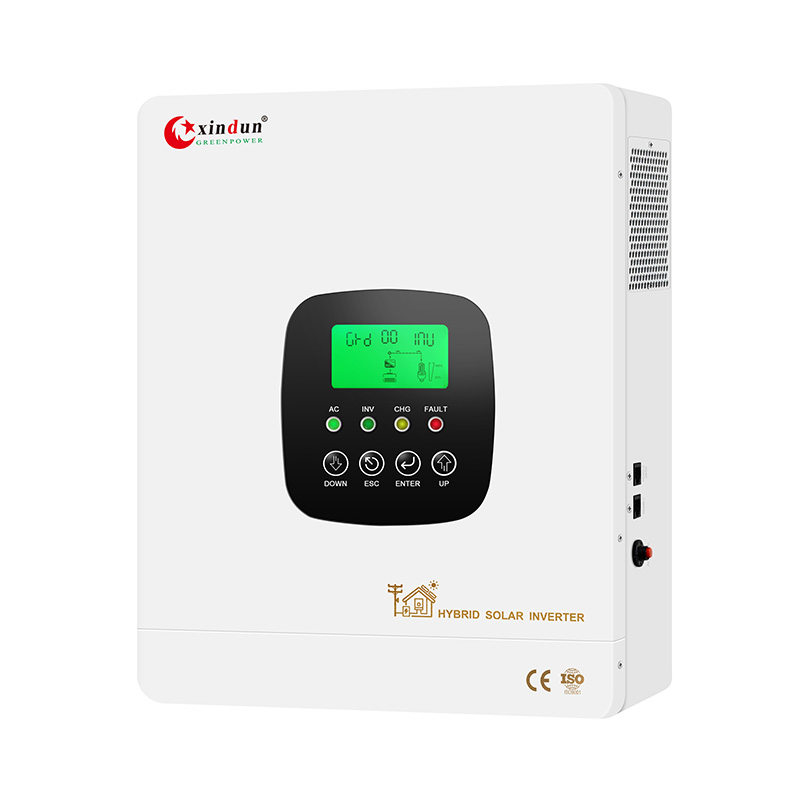
 Power Inverter
 Split Phase Inverter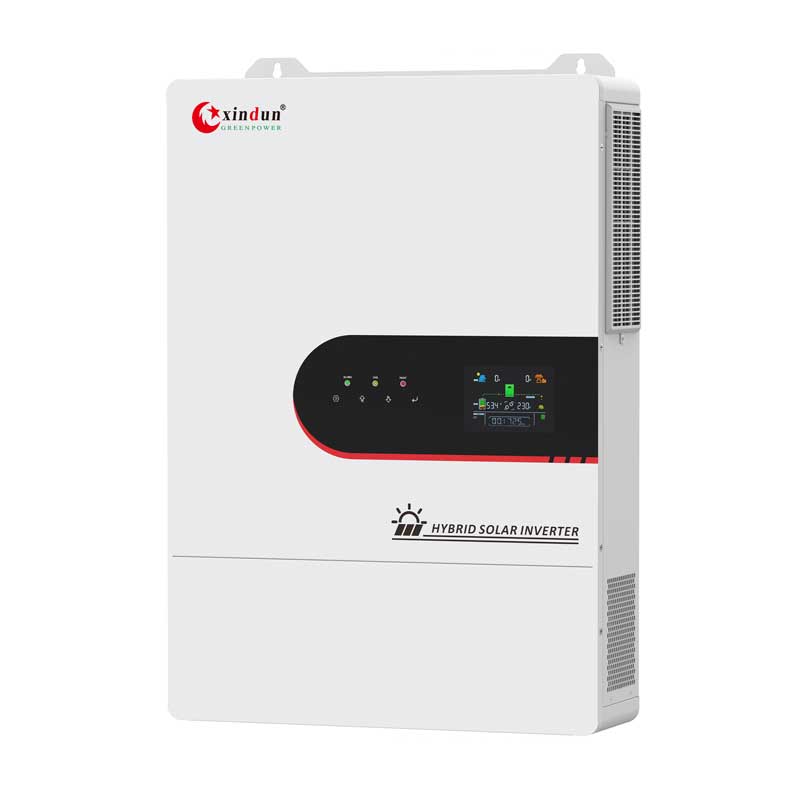
 Energy Storage Inverter

 3 Phase Inverter
 Solar System Kits
 Solar Charge Controller

 Solar Battery
 Asia
Asia
 Africa

 South America
 Europe
 North America
 Oceania & Antarctica


 Inquire
 Home
HomeDoes Hybrid Inverter Reduce Electricity Bills and Maximize Solar Power?
 Apr 16,2026

 XINDUN
Abroad, due to energy supply issues and policy factors, electricity bills are generally high for residents in some countries, both developed and developing. Therefore, many homeowners hope to reduce their electricity expenses by using solar power. Although the initial purchase and installation bills of solar power systems are relatively high, using solar energy to power homes remains cost effective option in the long run.
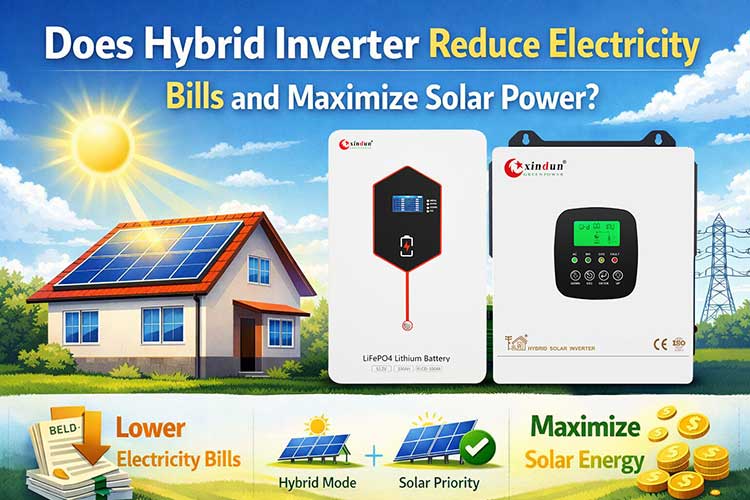
Solar power system consists of core components such as inverter, solar panel, solar controller, and battery. Among these, the inverter, as the central hub for energy conversion and dispatch, directly determines the utilization efficiency of solar power generation. Hybrid inverter, due to their combined and complementary functions of solar, grid, and battery power, have become the preferred solution for current residential solar power system.
In the application of solar power system, the key to maximizing the use of solar power generation and effectively reducing electricity bills lies in the system configuration and operation strategy, among which the parameter settings of the hybrid inverter are particularly important.
Users first need to understand the functions and operating modes of the hybrid inverter and set the parameters accordingly. Taking the Xindun HFP hybrid inverter as example, this inverter has 3 operating modes (hybrid/off grid/on grid), 3 output priorities (Solar priority/Mains priority/Battery priority), and charging modes (SNU/OSO/CSO), among other core parameter settings.
Different operating modes and parameter combinations directly determine the utilization rate of solar power generation and the effect of electricity bill savings. Users need to make targeted settings based on their own electricity consumption scenarios and local electricity prices. Xindun has previously shared articles about these three core setting parameters, which will give you a deeper understanding of the operating modes of hybrid inverter.
So, does hybrid inverter reduce electricity bills and maximize solar power?
Taking the Xindun HFP hybrid inverter as example, with its working mode set to "hybrid mode", output priority selected as "solar priority", and charging priority first set as "OSO", this solution can minimize grid power consumption, maximize solar power generation utilization, and achieve the best electricity cost saving effect in scenarios with high grid electricity prices. At the same time, it eliminates the risk of power outages and is the only optimal solution. It is very suitable for home users who want to minimize electricity expenses and make full use of solar power generation.
Hybrid Inverter Mode Setting Strategy
In "hybrid mode", the inverter can coordinate and complement solar, grid power and battery power, prioritize the consumption of solar, and always use grid power as backup. When the grid power is normal, solar power is used first. In the event of grid power failure, it can seamlessly switch to "solar + battery" inverter power supply.
"Solar priority" output level - solar power generation directly supplies the load with no charging and discharging losses, maximizing self generation and self consumption efficiency. Any unused electricity is stored in the battery for use at night or on cloudy or rainy days, with zero power waste.
The "OSO" charging mode is the preferred option and is a mandatory parameter in high electricity bills cenarios. It allows only solar charging, completely prohibiting charging the battery with expensive grid electricity. Every kilowatt hour of battery power comes from free solar energy, maximizing the utilization of solar power generation. The "CSO" charging mode (hybrid solar and grid charging) is the alternative. It also prioritizes solar charging, allowing grid electricity to supplement the battery only during consecutive cloudy or rainy days or when insufficient solar power generation leads to battery depletion. This balances solar utilization with battery safety, preventing battery damage from over discharge, while also minimizing grid electricity usage and ensuring the continuity of system power supply.
To maximize the use of solar power and reduce electricity bills, these three core parameters are the main settings for the Xindun HFP hybrid inverter. Besides these three core parameters, other parameter settings are also important, such as the "SOC" setting related to the battery. If the system's energy storage battery is lithium battery, then it is necessary to connect to the lithium battery BMS communication to set the "SOC" parameter. This allows the inverter to accurately identify the battery's charge and status, precisely control charging and discharging, maximize the use of battery energy storage, and prevent battery damage.
Hybrid Inverter "SOC" Setting Optimization
"SOC" refers to the battery's percentage charge, allowing for fine grained battery management through preset settings—charge and discharge management, operating mode switching, and battery protection. The Xindun HFP hybrid inverter has five SOC settings: "Charging Cut off SOC," "AC to Inverter SOC," "Inverter to AC SOC," "Low Voltage Recovery SOC," and "Power Off SOC."
The “SOC” setting is 95-98%, allowing the battery to charge to its maximum capacity while avoiding full charging. This stores surplus solar power generated during the day, ensuring no free solar power is wasted.
"CMS to Inverter SOC" is 80% (default value), which can be increased to 90%. When the battery reaches this percentage, it will immediately switch back to solar or battery power and stop using AC charging (set for CSO charging mode).
"Inverter to Mains SOC" is 10% (default value), which can be reduced to 5%. This allows the battery to supply power to the grid only when the grid reaches this percentage, maximizing the use of stored solar power and minimizing grid power consumption.
The "Low Voltage Recovery SOC" setting is 15-20%, allowing the battery to charge to this percentage and automatically resume inverter operation, continuing to use solar or battery power instead of mains power (set for CSO charging mode).
The "Power Off SOC" setting is 5-10%, allowing the battery power to be consumed to the minimum discharge limit to avoid over discharge damage, while also maximizing the battery's usable capacity.
The above settings for the Xindun HFP hybrid inverter maximize the use of solar power to reduce electricity costs. This series of optimized settings prioritizes solar power generation, with the battery used only for storing surplus solar power and as an emergency backup. Mains power is used as a backup for emergency power replenishment, reducing ineffective charge discharge cycles of the battery, extending its lifespan, and ensuring that the vast majority of household power and battery charging energy throughout the year comes from free solar energy.
This article uses the Xindun HFP hybrid inverter as example. Although the functional settings of hybrid inverter from different manufacturers vary, the core logic is the same. When purchasing hybrid inverter, users need to fully understand its features and operating modes to better utilize the equipment. Optimizing the parameter settings of hybrid inverter is a systematic project that requires comprehensive adjustments based on factors such as the inverter's operating modes, local electricity pricing policies, and household electricity consumption habits. Continuous monitoring is necessary for dynamic optimization to maximize the utilization value of solar power generation.
Xindun Hybrid Inverter Recommendation
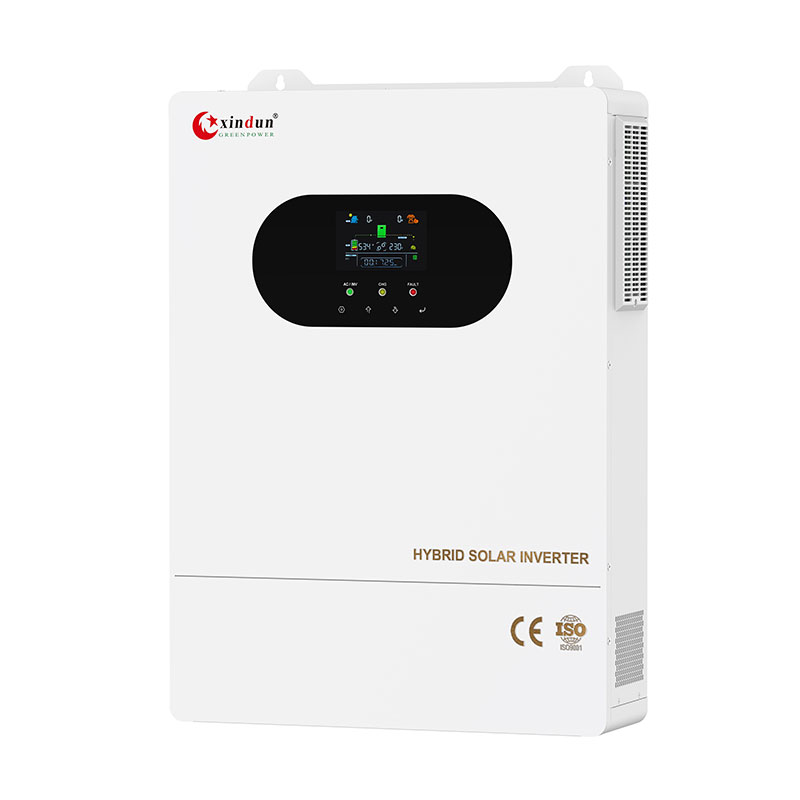
The HFP hybrid inverter is a high frequency, on grid and off grid hybrid solar inverter. It can be set to hybrid, off grid, and on grid modes, with flexible switching between the three modes. It also supports battery-free operation. Featuring high frequency pure sine wave output, it utilizes a synergistic hybrid system of solar, grid power, and battery power for triple energy security. During periods of sufficient sunlight, it provides full solar power for charging; during periods of low sunlight, solar and battery power complement each other for DC power; and in the event of power outage, grid power seamlessly compensates, significantly reducing your electricity bills and ensuring uninterrupted power supply. It is particularly suitable for households and small locations that want to save on electricity bills and maximize the use of solar power for self consumption.
In addition to the HFP hybrid inverter, the HFP-C, HFP-S, and HFP-E hybrid inverters also have the same functions, and feature dual output capability. Both the main and auxiliary AC outputs can be driven independently or simultaneously, providing balanced and intelligent power supply. They can power different devices at the same time, flexibly meeting the needs of users with multiple loads and distributing power more flexibly and rationally.
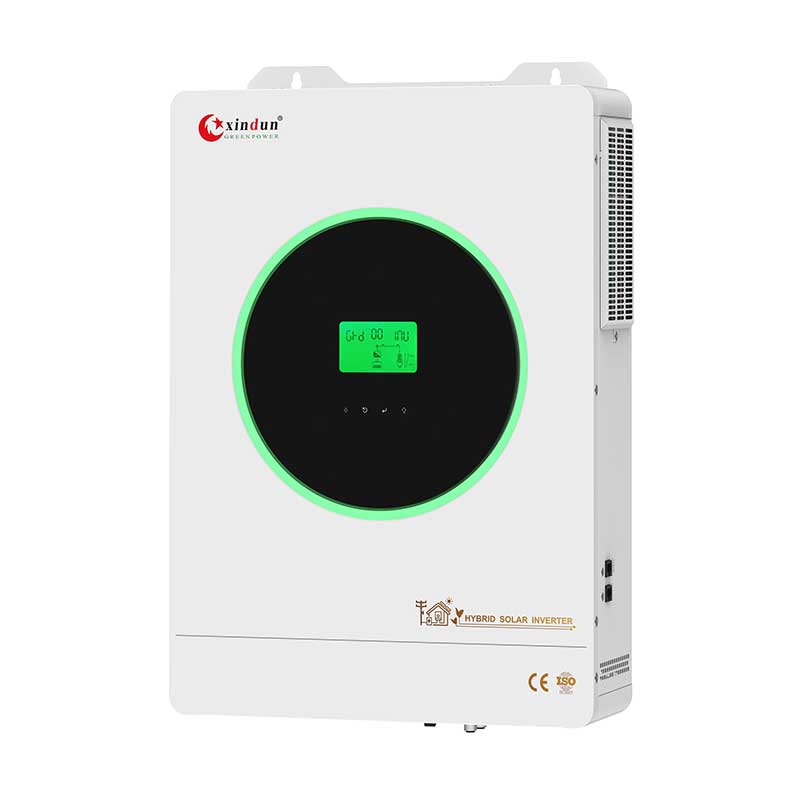
The HFP-C dual output hybrid inverter features ring shaped LED RGB indicator strip design, unique RGB light strip, intelligent color indication, and 8 customizable colors.
The HFP-E dual output hybrid inverter features detachable screen design, with the screen module supporting external split connection. Users can easily remove the inverter's display panel according to their actual application needs and flexibly install it in a location that is easy to observe, operate, and monitor.
The HFP, HFP-C, HFP-S, and HFP-E hybrid inverters all output AC voltages of 220/230/240V. However, many countries abroad use the US standard voltage (AC 120V or 110V). Therefore, the HFU series hybrid inverter (3.3kW/6.3kW) is very suitable. This is a US standard single phase hybrid inverter designed specifically for US standard voltage applications, outputting AC 120V US standard voltage. All other functions are completely consistent with the HFP series, making it US standard inverter that combines practicality and economy.
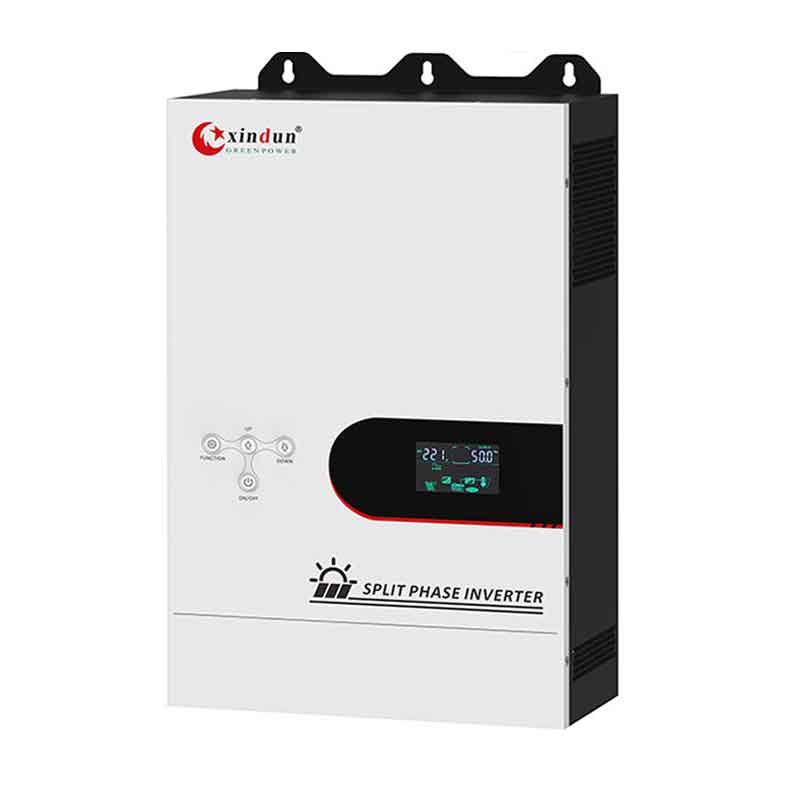
In addition to US standard single phase inverter, there are also split phase hybrid inverter, such as the HU series US standard split phase hybrid inverter (10kW/12kW), which offers both split phase and single phase modes, providing dual voltage outputs of 120V and 240V, and features time of use charging and discharging settings. Furthermore, it can support parallel operation of up to 6 inverters (60kW/72kW), enabling not only single phase parallel output but also two phase split phase parallel operation, split phase parallel operation, and three phase parallel operation. Whether facing the stability requirements of residential power supply or the complex load conditions in commercial and industrial scenarios, these modes provide reliable power support.
Properly configured hybrid inverter can reduce electricity bills. By employing hybrid mode, solar priority, and OSO charging mode, the utilization of solar power can be maximized, reducing reliance on grid power and effectively lowering electricity expenses.
 Can Off Grid 3 Phase Solar Inverter be Connected to Mains Power Supply?
 Top Selling Products













 WeChat
 Email
Email WhatsApp